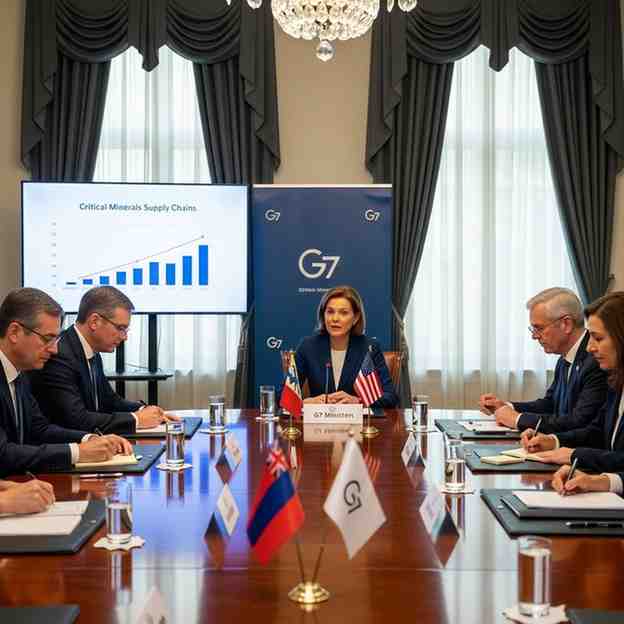
Amid China-Japan Tensions, G7 Talks Focus on Reducing Rare Earth Dependence
Amid escalating tensions between China and Japan over export controls, the United States is convening a high-level gathering of Group of Seven ministers this week to deliberate on rare earths and critical raw materials. The meeting underscores mounting apprehensions among leading industrialized nations regarding over-reliance on Chinese-dominated supply chains, which are fundamental to defense, clean energy, and advanced technology sectors.
G7 Meeting in Washington and Wider Participation
Hosted in Washington by U.S. Treasury Secretary Scott Bessent, the meeting will include participation from finance ministers of the G7 nations. Officials from key partner economies including Australia, South Korea, India, Mexico, and the European Union are also expected to join. The core agenda will focus on securing critical mineral supplies, enhancing rare earth processing capabilities, and fortifying global supply chains against geopolitical coercion and disruptions.
China-Japan Tensions Over Export Curbs
The dialogue gains urgency as Japan voices alarm over new Chinese restrictions on rare earth exports. Reports indicate China has expanded curbs against Japan to include civilian-use materials, with shipping approvals being delayed or denied. This follows diplomatic strains after remarks by Japanese Prime Minister Sanae Takaichi concerning Taiwan. Japan has accused China of economically "weaponizing" rare earths, an allegation Beijing has dismissed.
Rare Earths and Strategic Leverage
China commands a predominant share of global rare earth mining, processing, and permanent magnet manufacturing, granting it substantial influence over downstream industries worldwide. Beijing has previously employed export restrictions as a countermeasure in trade disputes, despite past truce agreements. In response, Washington and its allies are intensifying efforts to cultivate alternative supply chains, especially for rare earth magnets vital to defense systems, electric vehicles, and consumer electronics.
Push for Alternative Supply Chains
The United States has expressed confidence in leveraging domestic innovation to diminish Chinese dominance, while European nations like Germany have shown willingness for coordinated action with partners. The Washington meeting exemplifies a broader strategic alignment among democratic economies to diversify sources, invest in allied processing infrastructure, and elevate critical mineral security to a paramount national security and economic priority in an increasingly divided global landscape.
Exam-Focused Points:
-
Rare Earth Elements (REEs) are 17 metals critical for defense tech, renewables, and high-tech electronics .
-
China is the world's largest producer and processor of rare earths, controlling a majority of the global supply chain.
-
The G7 comprises the United States, Canada, United Kingdom, France, Germany, Italy, and Japan .
-
Supply chains for critical minerals are now treated as a core national security concern .
-
Initiatives aim to reduce dependence through friendshoring and building alternative processing capacities .
Month: Current Affairs - January 13, 2026
Category: Geopolitics - Resource Security