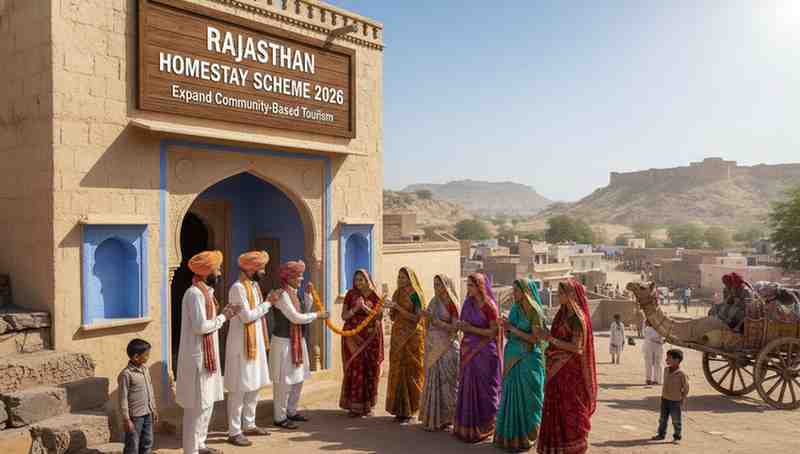
New Rajasthan Homestay Policy Simplifies Approvals and Boosts Rural Income
Rajasthan’s Tourism Department has introduced the Rajasthan Homestay (Paying Guest House) Scheme – 2026 , aimed at strengthening tourism-led livelihoods, promoting rural entrepreneurship and widening local participation in hospitality services. The policy arrives amid sustained growth in visitor inflows, with the state registering a 9.74% increase in tourist arrivals in 2025. Official figures indicate that over 25.44 crore tourists visited Rajasthan, predominantly domestic travellers.
Strengthening Rural and Household Income
The scheme positions homestays as an instrument for decentralised economic development. By enabling residents to monetise unused residential space, the government seeks to diversify income sources, especially in rural and semi-urban areas.
Small investors, family households and women entrepreneurs are expected to benefit from lower entry barriers. The framework aligns with broader policy priorities emphasising self-employment, cultural tourism and locally anchored hospitality models.
Streamlined Licensing and Greater Flexibility
A central reform under the 2026 scheme is the simplified approval mechanism. The earlier multi-department clearance structure has been replaced by a single-window digital system, reducing procedural delays and documentation burdens.
Operational capacity has been expanded. The maximum number of rooms permitted per residential unit has increased from five to eight, while the total bed capacity is capped at 24. The residency requirement mandating owner presence has been removed, allowing operation through owners, lessees or authorised caretakers as per prescribed guidelines.
Registration and Regulatory Compliance
Registrations will be administered through local Tourism Department offices, reinforcing decentralised governance. Rural applicants may also complete registration at Tourist Reception Centres (TRCs).
The scheme mandates adherence to defined infrastructure and safety standards. Homestays must operate within residential premises and ensure attached bathrooms, sanitation, ventilation, uninterrupted water and electricity supply, and fire safety compliance. Parking and waste disposal norms must align with local authority regulations.
Important Facts for Exams
-
Rajasthan Homestay Scheme 2026 increases room limit from five to eight.
-
Maximum bed capacity per homestay unit fixed at 24.
-
Introduces single-window digital approval system.
-
Over 25.44 crore tourists visited Rajasthan in 2025.
Homestay operators must maintain guest registers for seven years and report foreign guest details to authorities, ensuring regulatory oversight and security compliance.
Month: Current Affairs - February 26, 2026
Category: Tourism Policy | Rural Economy