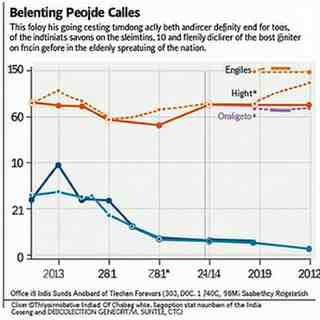
The demographic profile in India is going through a noticeable change where fertility is on the decline, birth, and death rates are on the decline and the number of elderly people is on the rise. The recently published Sample Registration Survey (SRS) Statistical Report 2023 , published by the Office of the Registrar General of India, shows the way these changes are redefining the population structure of the nation and its future growth trends.
Fertility and Birth Rates Decreases.
Based on the recent statistics, in India Crude Birth Rate (CBR) decreased by 19.1/1,000 in 2022 and then 18.4 in 2023 . Total Fertility Rate (TFR) decreased as well to 1.9 , having stood at 2.0 in two years.
The replacement level is believed to be 2.1 which is required to stabilize the population. A decline to this height shows that, when the population grows, then there will be a slowing growth and even a negative growth unless this is compensated through migration.
Local differences in Fertility Rates.
Is there a variation in fertility trends between the states:
-
Above Replacement Level:
- Bihar - 2.8
- Uttar Pradesh - 2.6
- Madhya Pradesh - 2.4
- Rajasthan - 2.3
- Chhattisgarh - 2.2
- Lower Fertility (Below Replacement Level):
- Delhi - 1.2
- Tamil Nadu - 1.3
- West Bengal - 1.3
- Maharashtra - 1.4
In total, TFRs in 18 States and Union Territories fall below the replacement rate, emphasising more rapid demographic transition in the southern and urbanised areas than in the north.
Birth and Death Indicators Trends.
There is also improvement in other health indicators provided by the SRS report:
- Crude Death Rate (CDR): Dropped to 6.4 in 2023, down form 6.8 in 2022.
- Infant Mortality Rate (IMR): The rate has been improved to 25 deaths among every 1,000 live birth, which is a seven-point gain in the past five years.
- Sex Ratio at Birth (SRB): It rose to 917 girls per 1,000 boys, but remains out of balance. The highest SRB was in Kerala and Chattisgarh with the lowest in Bihar and Uttarakhand.
The Growing Old And Its Consequences.
India is slowly transforming to an ageing society. In 2023 , the number of the elderly (60 years and older) was 9.7% compared to 9% in 2022.
- The highest share of the elderly is in Kerala which is 15%.
- Assam, Delhi and Jharkand indicated the lowest percentage of the elderly at around 7.6 -7.7.
This will pose a great challenge to the healthcare, pension, and social welfare systems since there will be an increase in the numbers of people requiring elderly care.
Delays in Data Publication
Although the 2023 SRS report is published, 2023-year-old reports of the Civil Registration System (CRS) and Medical Certification of Cause of Death (MCCD) are still not published. Earlier the Registrar General had also postponed the release of 2021 and 2022 datasets. Such statistics are critical to policy planning, surveillance of health and related demographic changes .
Conclusion
The findings of the SRS 2023 affirm that India is in demographic transition , since fertility rates are declining, and the number of the aged is on the rise. Although there are positive changes in mortality and sex ratio, regional inequalities on fertility are still high. The policymakers will find themselves in a twofold dilemma of accommodating the creation of population stasis and getting ready to an ageing population.
Month: Current Affairs - Sep 08, 2025
Category: current affairs daily