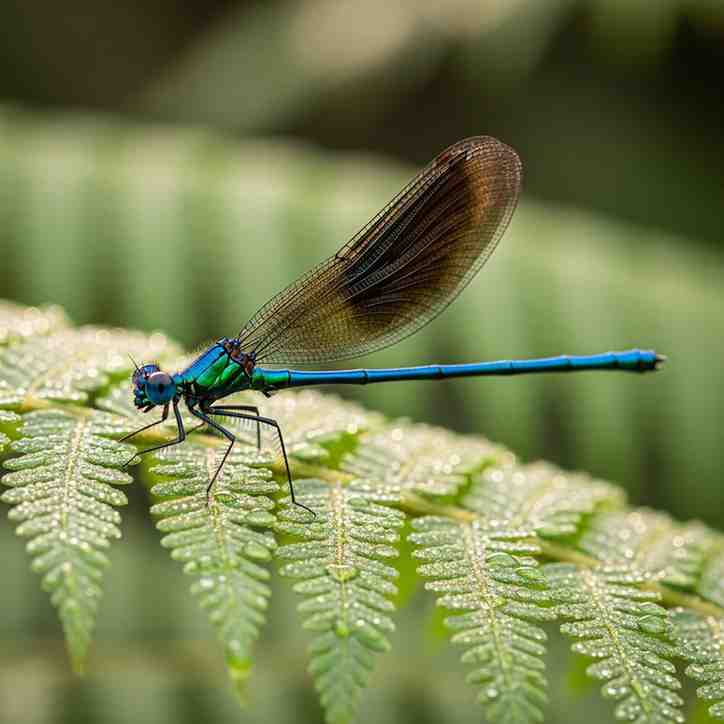
New Kodagu Shadowdamsel Discovered in Western Ghats Forests
A newly identified damselfly species from the Western Ghats has added fresh insight into the region’s exceptional biodiversity. Named the Kodagu Shadowdamsel (Protosticta sooryaprakashi) , the species was discovered along cool, shaded stream habitats in Karnataka. The finding was confirmed through a combination of detailed field studies and DNA analysis, establishing the insect as a distinct evolutionary lineage within the Protosticta genus.
Discovery Across Kodagu and Agumbe
Surveys conducted along the Sampaje River in Kodagu and in the mist-covered forests of Agumbe yielded specimens that appeared similar to known damselfly species, yet displayed subtle differences in structure and proportions. Collaboration among taxonomists and research institutions validated these observations and confirmed the presence of a species uniquely adapted to shaded riparian ecosystems within the Western Ghats.
Unique Morphological Traits
The Kodagu Shadowdamsel is easily distinguished by its striking colouration. Males possess vivid sky-blue markings on the prothorax , coupled with a predominantly dark brown to black body. Unlike its closest relatives, the species exhibits a remarkable anatomical trait: the male genital ligula features lobes shaped like a duck’s head , a morphology not observed in any other Protosticta species.
Ecological Role and Behaviour
In its natural habitat, the damselfly perches on vegetation near slow-flowing streams and displays a delicate, fluttering flight. Its dependence on cool, shaded microhabitats highlights the importance of riparian zones, which are essential for maintaining freshwater biodiversity and landscape stability across the Western Ghats.
Exam Oriented Facts
-
Scientific name: Protosticta sooryaprakashi .
-
Found in Kodagu and Agumbe forests of Karnataka.
-
Males exhibit sky-blue prothorax markings and a duck-shaped genital ligula.
-
Named in honour of botanist Dr. Sooryaprakash Shenoy .
Month: Current Affairs - December 03, 2025
Category: biodiversity of Western Ghats