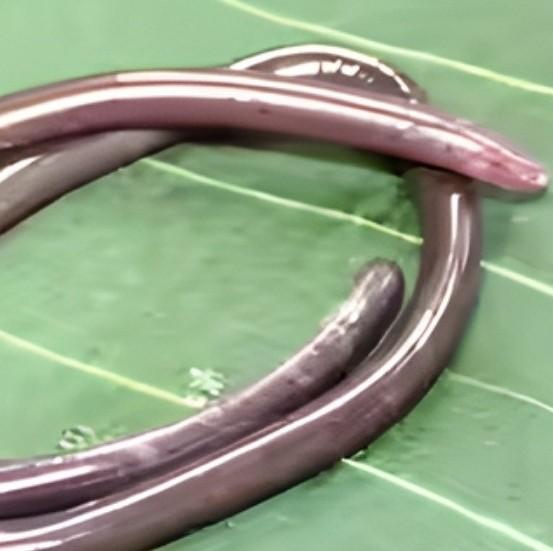
New Limbless Amphibian Species Discovered in Northern Western Ghats
In a notable contribution to India’s faunal diversity records, a team of Indian scientists has identified a rare, previously unknown subterranean amphibian species from the northern Western Ghats in Maharashtra. The species, named “Gegeneophis valmiki” , was discovered by a multi-institutional research team spearheaded by the Zoological Survey of India (ZSI) . The findings have been formally documented in the peer-reviewed international journal “Phyllomedusa” .
Discovery in a Biodiversity Hotspot
The species was first located during faunal surveys in 2017 on the Valmiki Plateau in Satara district , part of the ecologically sensitive Western Ghats —a UNESCO World Heritage Site and global biodiversity hotspot . This discovery underscores the rich, yet underexplored, biodiversity of the unique plateau ecosystems within this mountain range, highlighting the potential for more hidden species.
Characteristics of a Blind Caecilian
Gegeneophis valmiki belongs to the genus Gegeneophis , a group of limbless amphibians known as caecilians . Adapted for a completely fossorial (burrowing) lifestyle , they spend their entire lives underground. These creatures have a worm-like appearance , with eyes covered by bone and skin , rendering them functionally blind. Their elusive nature and habitat make them extremely challenging to study, leading to significant gaps in documentation.
Etymology and Research Significance
The species has been named after the historic Maharshi Valmiki Mandir situated near its discovery site. K P Dinesh , a senior scientist at ZSI involved in the study, emphasized that documenting such cryptic species demands persistent, long-term field surveys and specialized taxonomic skills. This discovery not only enriches India’s amphibian taxonomy but also reinforces the critical need for systematic biodiversity exploration.
Conservation Imperative
Dhriti Banerjee, Director of ZSI , pointed out the urgent conservation context. With nearly 41% of global amphibian species threatened with extinction , many could face “silent extinctions” — disappearing even before being scientifically described. The discovery of Gegeneophis valmiki is a stark reminder of the hidden biodiversity at risk and calls for intensified research and conservation efforts focused on India’s lesser-studied habitats.
Exam-Focused Important Facts:
-
New species: Gegeneophis valmiki (a blind caecilian).
-
Discovered in: Valmiki Plateau, Satara district, Maharashtra (Northern Western Ghats).
-
Discovery team: Led by the Zoological Survey of India (ZSI) .
-
Key habitat: Western Ghats , a UNESCO biodiversity hotspot .
-
Caecilians are limbless, fossorial (burrowing) amphibians .
-
Published in: "Phyllomedusa" journal.
-
Conservation status: Amphibians are among the most threatened vertebrate groups globally .
Month: Current Affairs - January 19, 2026
Category: