Lepidocampa sikkimensis Revives Indian Soil Biodiversity Research
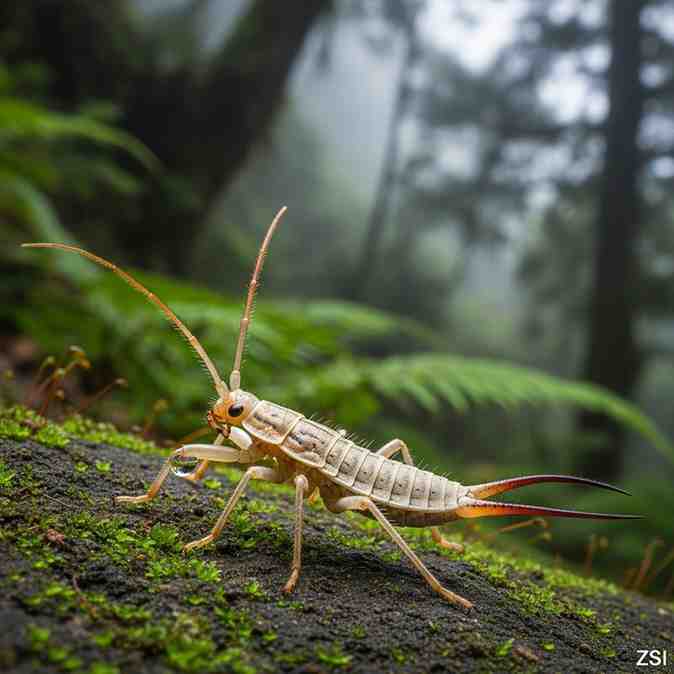
Scientists from the Zoological Survey of India (ZSI) have identified a new species of Diplura in the eastern Himalayan region, marking a notable advancement in Indian taxonomic research. The wingless, soil-dwelling organism has been named Lepidocampa sikkimensis , becoming the first Diplura species formally described by an Indian research team. The findings were published on 7 January in the international journal Zootaxa .
Ancient Evolutionary Lineage
Diplurans belong to the class Hexapoda , a group of six-legged arthropods that includes insects and related primitive forms. Commonly referred to as two-pronged bristletails, these organisms are blind, minute, and adapted to life within soil ecosystems. Researchers consider Lepidocampa sikkimensis part of an ancient hexapod lineage, offering insights into early arthropod evolution.
Prior to this discovery, 17 Diplura species had been recorded in India, all described by foreign taxonomists. The new identification reflects renewed domestic expertise in lesser-studied invertebrate groups.
Field Discovery and Identification
The research team led by Dr Surajit Kar collected specimens near Ravangla in Sikkim, later confirming the species’ occurrence in Kurseong, West Bengal. The organism was distinguished through detailed morphological analysis, including body scale arrangement, chaetotaxy (bristle patterns), and appendage structures.
The study also documented the rediscovery of Lepidocampa juradii bengalensis , a rare subspecies absent from records for nearly five decades.
Ecological and Scientific Importance
Diplurans play a functional role in soil ecosystems by contributing to nutrient recycling and maintaining soil structure. The research further generated India’s first DNA barcode dataset for a Lepidocampa species, integrating molecular techniques with classical taxonomy.
Important Facts for Exams
-
Hexapoda includes insects and primitive six-legged arthropods.
-
Diplura are blind, soil-dwelling micro-arthropods with forked tails.
-
Eastern Himalayas: globally recognised biodiversity hotspot.
-
DNA barcoding enables species identification via genetic markers.
Significance for Indian Taxonomy
The discovery enhances India’s soil biodiversity inventory and underscores the growing role of indigenous research institutions in systematic biology.
Month: Current Affairs - February 18, 2026
Category: Environment | Biodiversity