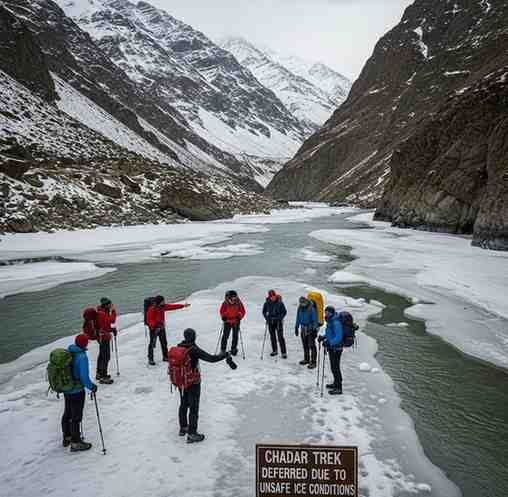
Chadar Trek Postponed as Zanskar River Ice Remains Unsafe
The world-famous Chadar trek in Ladakh has been postponed after safety assessments found that the Zanskar River has not frozen adequately for secure movement. The decision, taken by the local administration, has led to disappointment among adventure enthusiasts who consider the trek one of India’s most demanding and iconic winter experiences.
Safety Assessment Leads to Delay
The trek, originally slated to begin on January 10, was deferred following an on-ground inspection by district authorities in Leh. Officials confirmed that the ice layer along several critical stretches of the river remains too thin to safely support trekkers. A detailed assessment report is awaited, after which authorities will announce a revised start date. If weather conditions improve, the trek may tentatively begin around mid-January.
Strengthened Rescue and Medical Arrangements
Given the risks posed by unstable ice, the district administration has decided to enhance safety preparedness along the route. Additional teams from the National Disaster Response Force will be deployed this season. Authorities are also mapping locations for temporary camps, medical aid posts, rescue points, and police presence to ensure rapid response in case of emergencies.
Climate Variability and Operational Challenges
Local tourism stakeholders have pointed out that incomplete ice formation on the Zanskar River is the primary reason for the delay. In recent years, the Chadar trek has faced repeated disruptions. In 2024, parts of the route were curtailed due to infrastructure work on the Nimu–Padum–Darcha road. Experts and residents have also raised concerns that rising temperatures and erratic winter conditions linked to climate change are reducing the number of days required for the river to freeze solidly.
Exam-Focused Key Points
-
The Chadar trek is conducted on the frozen Zanskar River in Ladakh .
-
It usually takes place during peak winter months, January–February.
-
Ice thickness is critical for trek safety and is assessed annually.
-
Climate change is affecting freezing patterns in the Himalayan region.
-
Disaster response forces are deployed to manage risks during the trek.
Winter Tourism Amid Changing Conditions
Studies on climate trends in Ladakh indicate a gradual rise in average temperatures and declining winter precipitation, reducing the duration of intense cold necessary for stable ice formation. Despite these challenges, the administration has reiterated its commitment to promoting winter tourism, viewing activities like the Chadar trek as vital for sustaining livelihoods and showcasing Ladakh’s unique cold-desert heritage.
Month: Current Affairs - Jan 15, 2026
Category: Climate Change, Adventure Tourism