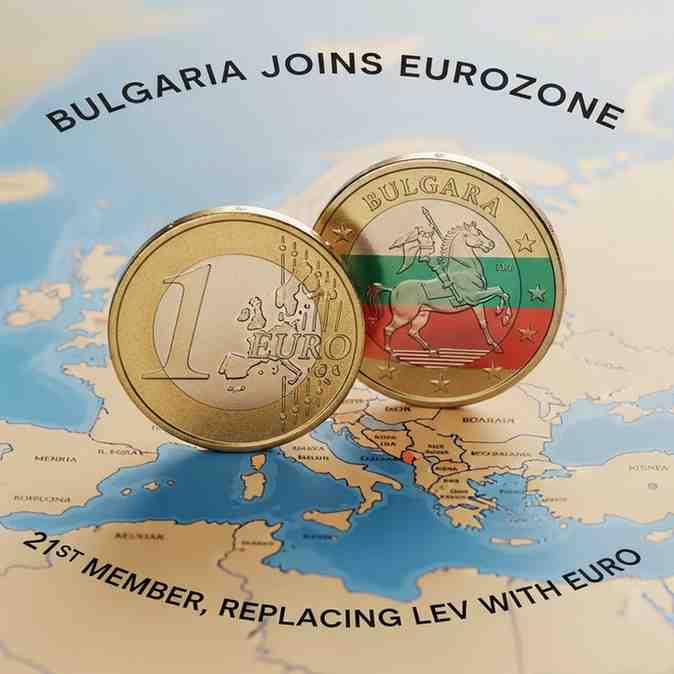
Bulgaria Adopts Euro Amid Political Instability and Domestic Opposition
Bulgaria has formally become the 21st member of the eurozone , marking a decisive step towards deeper European integration. With this transition, Bulgaria has retired the lev , its national currency in circulation since 1881, and adopted the euro as legal tender. The move comes at a time of persistent political instability and vocal domestic opposition, particularly from pro-Russia political groups.
What Is the Eurozone?
The eurozone, officially known as the euro area , consists of European Union countries that have adopted the euro as their sole legal currency. It was established under the Maastricht Treaty , which laid the foundation for economic and monetary union, including a common currency and a unified central banking framework. With Bulgaria’s entry, 21 of the 27 EU members now use the euro.
Bulgaria’s Path to Euro Adoption
Bulgaria’s lev had been pegged first to the Deutschmark and later to the euro since 1997, significantly reducing exchange-rate risk and smoothing the transition. Under EU rules, all members except Denmark are obligated to adopt the euro once convergence criteria are met. These include price stability, fiscal discipline, central bank independence and legal alignment with EU frameworks.
Economic and Institutional Benefits
Joining the eurozone eliminates currency conversion costs, improves price transparency and boosts trade and investment. Monetary policy will now be guided by the European Central Bank , which targets inflation close to 2%. Bulgaria also gains representation on the ECB’s Governing Council, giving it a voice in eurozone interest-rate decisions.
Important Facts for Exams
-
Eurozone is a subset of the European Union
-
ECB manages monetary policy for eurozone states
-
Denmark has a formal opt-out from euro adoption
-
Croatia was the previous entrant
Political Opposition and Uncertainty
Despite economic rationale, euro adoption has faced resistance. Bulgaria has held seven parliamentary elections in four years, alongside protests that culminated in the resignation of Prime Minister Rosen Zhelyazkov ’s cabinet in December 2025. The far-right, pro-Russia Revival Party has warned of debt risks similar to Greece, while historical and cultural ties with Russia continue to shape public debate—despite Bulgaria’s membership in the North Atlantic Treaty Organization .
Month: Current Affairs - January 04, 2026
Category: International Relations | European Union