Breakthrough research offers hope for PSC patients
A new monoclonal antibody therapy has delivered encouraging early results for patients with primary sclerosing cholangitis (PSC) , a rare and progressive liver disorder for which no approved medical treatment currently exists. Researchers from the University of California, Davis have reported that the experimental drug nebokitug appears safe and may reduce liver inflammation and fibrosis. The findings were published in the American Journal of Gastroenterology , marking an important step toward a potential disease-modifying therapy.
Understanding the unmet medical need
PSC is a chronic cholestatic liver disease characterised by inflammation and scarring of the bile ducts. This disrupts bile flow, leading to liver damage, cirrhosis, and eventually liver failure. Many patients ultimately require liver transplantation. The disease has no clearly identified cause, though a strong association with inflammatory bowel disease suggests immune system involvement along the gut–liver axis. Current treatment focuses only on managing symptoms and complications, highlighting the urgent need for targeted therapies.
How nebokitug works
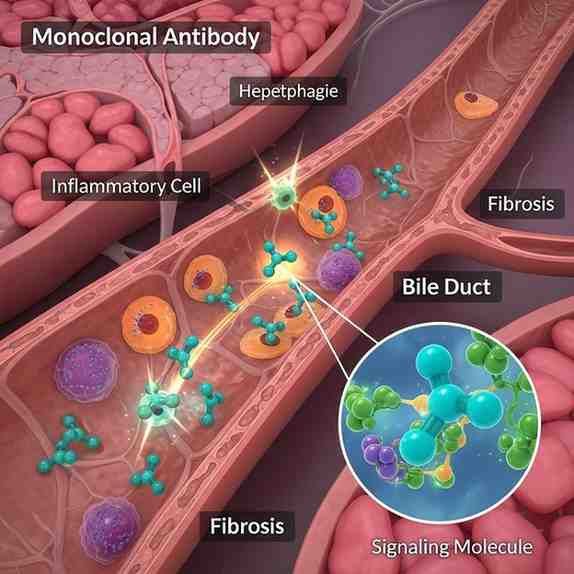
Nebokitug is a laboratory-engineered monoclonal antibody that targets CCL24 , a protein linked to inflammation and fibrosis. In PSC patients, CCL24 levels are abnormally high and concentrated around bile ducts, where they activate immune responses and promote tissue scarring. Blocking this pathway is believed to reduce both inflammation and fibrotic progression, forming the rationale for clinical testing.
Phase 2 trial outcomes
The Phase 2 clinical trial included 76 PSC patients across five countries. Participants received intravenous infusions of nebokitug at two dose levels or a placebo every three weeks over 15 weeks . The primary goal was to assess safety and tolerability. Researchers found that nebokitug was safe and well tolerated , with no major adverse effects reported.
Early signs of effectiveness
Patients receiving nebokitug—particularly those with more advanced disease—showed improvements in liver stiffness and fibrosis-related biomarkers compared to placebo. According to lead investigator Christopher Bowlus , these results suggest the drug could meaningfully influence disease progression, though larger and longer trials are needed.
Important Facts for Exams
-
Primary sclerosing cholangitis is a rare, progressive cholestatic liver disease
-
There is currently no approved drug therapy for PSC
-
Nebokitug targets CCL24 , a protein involved in inflammation and fibrosis
-
Phase 2 trials assess safety and early efficacy signals
Month: Current Affairs - December 26, 2025
Category: Health & Science, Medical Research