Three Iranian Satellites Reach Low-Earth Orbit
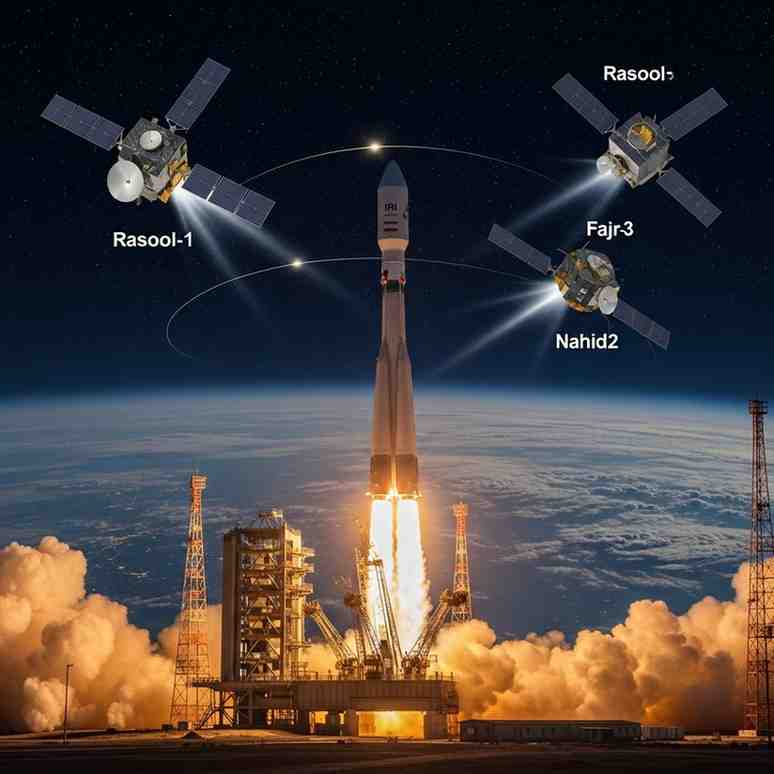
Iran has successfully deployed three domestically developed satellites into low-Earth orbit (LEO) with the assistance of Russian Soyuz launch vehicles . The launch took place on December 28 and was confirmed by Iranian state media. The satellites— Paya, Zafar-2, and a second Kowsar unit —mark another expansion of Iran’s space programme at a time of sustained Western sanctions and heightened scrutiny over Tehran’s strategic capabilities.
Civilian Objectives of the Mission
According to Iran’s official news agency IRNA , the satellites are designed for earth-observation purposes. Their intended applications include agricultural monitoring, natural resource management, and environmental assessment across Iran and neighbouring regions. Iranian officials have emphasised that the satellites are strictly civilian in nature and were developed using indigenous scientific and engineering expertise.
Growing Iran–Russia Space Partnership
Iran’s reliance on Russian launch services has grown as sanctions have limited its access to international space markets. Space cooperation between Tehran and Moscow has accelerated since 2022 , coinciding with Russia’s invasion of Ukraine and increasing diplomatic isolation of both countries. While Western governments allege that Iran has supplied military equipment to Russia—claims denied by both sides—space collaboration has emerged as a visible symbol of their strategic alignment.
Official Messaging and Strategic Signalling
Iran’s ambassador to Russia, Kazem Jalali , stated that the satellites were designed and manufactured entirely by Iranian scientists despite external pressure. He highlighted that Iran–Russia cooperation extends beyond publicly visible sectors, reinforcing narratives of technological resilience and strategic autonomy promoted by Iranian state media.
Important Facts for Exams
-
Soyuz is one of the world’s most reliable Russian launch vehicle families
-
Low-Earth orbit ranges roughly between 160 km and 2,000 km above Earth
-
Earth-observation satellites can have dual-use technological implications
-
Iran’s space programme operates despite long-standing Western sanctions
Month: Current Affairs - December 29, 2025
Category: Space Technology