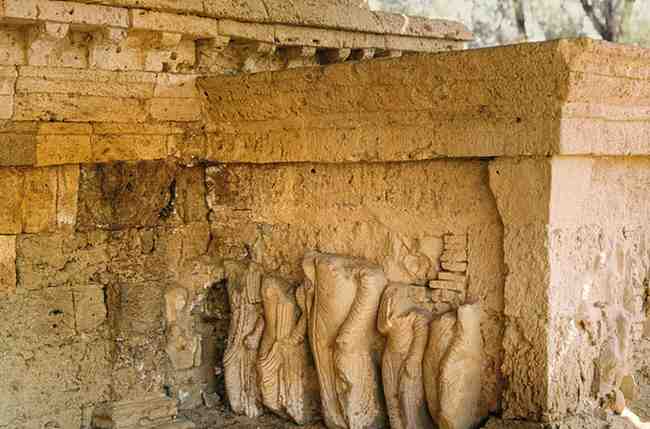
Rare Artefacts Unearthed at Bhir Mound Shed New Light on Gandhara Civilization
Pakistani archaeologists have made a landmark discovery at the UNESCO World Heritage Site of Taxila, unearthing rare decorative stones and ancient coins at the historic Bhir Mound. Officials have hailed this as the most significant find at the site in the last ten years, offering fresh perspectives on the early urban fabric of the Gandhara civilization.
Uncovering Ancient Treasures
The discoveries were made during ongoing excavations at Bhir Mound, the oldest settlement within the Taxila complex. From the northern B-2 trench, believed to be a residential zone, the team recovered:
-
Decorative Stone Fragments: Preliminary analysis identifies the material as lapis lazuli , a semi-precious stone highly prized in antiquity, dating back to the 6th century BC .
-
Ancient Bronze Coins: These coins have been dated to the 2nd century AD .
Coins Revealing Kushan-Era Pluralism
A detailed numismatic analysis by specialists from the University of Peshawar attributes the bronze coins to the Kushan dynasty . According to excavation head Aasim Dogar of the Punjab Department of Archaeology, the coins bear the image of Emperor Vasudeva , the last of the great Kushan rulers. The obverse depicts the emperor, while the reverse features a female religious deity, exemplifying the religious pluralism that characterized the Kushan period.
Taxila at Its Zenith
The finds underscore Taxila's golden age under Kushan rule (1st to 3rd centuries AD). During this era, particularly under Emperor Kanishka the Great , the city flourished as a major political, economic, and intellectual hub. Royal patronage fueled the construction of monumental stupas and monasteries, while Gandharan art —a unique synthesis of Greek, Roman, Persian, and Indian influences—reached its peak.
Evidence of Expansive Trade Networks
The presence of lapis lazuli , which historically originated from the Badakhshan region of modern Afghanistan , points to extensive long-distance trade networks. Numismatists note that Kushan coinage, circulating from the 1st to 4th centuries AD, reflects a robust economy and widespread commercial connections, including ties with the Roman Empire.
Archaeological Significance
Together, these artefacts significantly enhance scholarly understanding of the Gandhara civilization's urban planning, economic foundations, and cross-cultural exchanges . They provide tangible evidence of Taxila's role as a dynamic centre of commerce, art, and religious diversity in the ancient world.
Important Facts for Examinations:
-
Bhir Mound is the earliest urban settlement in the Taxila archaeological complex.
-
The discovery of lapis lazuli indicates established long-distance trade in the 6th century BC.
-
Kushan coinage often depicted rulers alongside diverse deities, reflecting societal pluralism.
-
Taxila under the Kushans was a premier centre for Buddhist learning and Gandharan art.
Month: Current Affairs - January 07, 2026
Category: History & Archaeology