India and Japan Coast Guards Enhance Interoperability with Joint HNS Response Drill in Mumbai
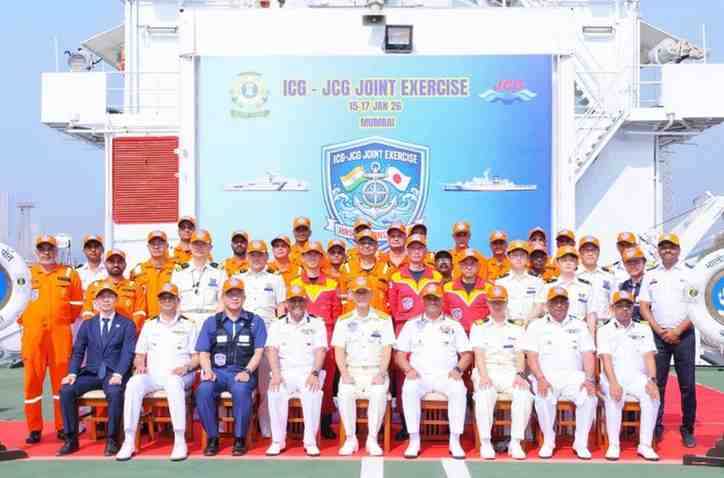
Mumbai, February 2026: In a significant step to bolster maritime safety and environmental protection, the Indian Coast Guard (ICG) and the Japan Coast Guard (JCG) conducted a specialized joint Hazardous and Noxious Substances (HNS) response drill off the coast of Mumbai. The exercise reinforced the strategic maritime partnership between the two nations and their shared commitment to ensuring a free and open Indo-Pacific, highlighting growing operational synergy.
High-Level Dialogue for Strengthened Ties
The engagement commenced with a high-level delegation from the Japan Coast Guard, led by its Commandant Admiral Yoshio Seguchi , visiting the Indian Coast Guard Regional Headquarters (West). Admiral Seguchi held a courtesy meeting with Inspector General Bhisham Sharma , Commander of Coast Guard Region (West). Both leaders emphasized the critical importance of deepening bilateral cooperation in key areas of maritime safety, environmental preservation, and effective disaster response.
Specialised Training on Dedicated Pollution Vessel
The core of the collaborative event was a hands-on HNS response exercise conducted onboard the Indian Coast Guard's premier pollution control vessel, ICGS Samudra Prahari . The drill saw seamless integration between the ICG's Pollution Response Strike Team and the specially deployed JCG National Strike Team from Japan. This practical collaboration was designed to demonstrate and refine coordinated mechanisms for tackling hazardous chemical spills and incidents at sea.
Meticulous Preparation and Joint Demonstration
Prior to the sea exercise, intensive planning sessions, procedural rehearsals, and classroom interactions were held in Mumbai. These preparatory meetings focused on aligning Standard Operating Procedures (SOPs) and response protocols for managing dangerous chemical leaks in the marine environment. The culmination was a live joint demonstration of HNS containment and recovery procedures, which was reviewed onboard by the visiting JCG Commandant and the ICG Regional Commander, showcasing a high level of interoperability and shared expertise.
Insights into Shipbuilding Capabilities
Extending beyond operational training, the Japanese delegation also visited Mazagon Dock Shipbuilders Limited (MDL) , a leading Indian defence shipyard. The visit provided insights into India’s advanced shipbuilding capabilities and reflected the broadening scope of India-Japan cooperation, which spans maritime security, environmental stewardship, and defence-industrial collaboration.
Exam-Focused Important Facts:
-
HNS Definition: Hazardous and Noxious Substances (HNS) are chemicals and materials transported by sea that pose significant risks to health, safety, and the marine environment in case of a spill.
-
Specialised Vessel: ICGS Samudra Prahari is the Indian Coast Guard’s dedicated, state-of-the-art pollution response vessel .
-
Strategic Context: The enhanced India-Japan maritime cooperation actively supports the vision for a free, open, and inclusive Indo-Pacific region.
-
Elite Units: National Strike Teams (NST) are highly specialized units within coast guards, specifically trained for responding to major marine pollution incidents.
-
Key Agreement: This cooperation falls under the broader framework of the India-Japan Memorandum of Cooperation on Coast Guard Collaboration .
Month: Current Affairs - January 19, 2026
Category: MaritimeSecurity-IndoPacific