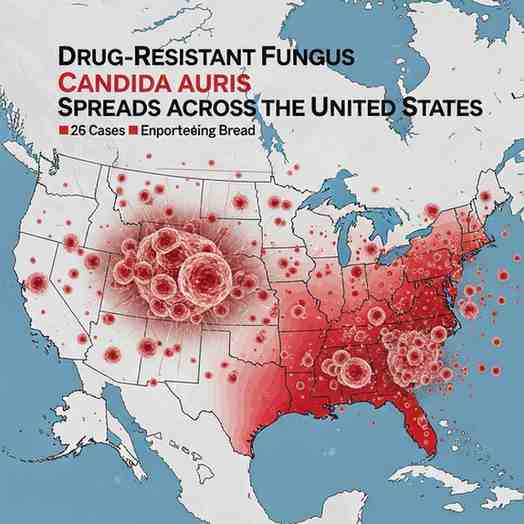
Deadly Fungal Threat Emerges Alongside Flu Crisis
As the United States battles one of its harshest flu seasons in recent years, public health authorities are confronting an additional and dangerous challenge. A rapidly spreading, drug-resistant fungal infection known as Candida auris is expanding across the country, placing added strain on hospitals and long-term care facilities already operating under pressure.
Growing Number of Cases Nationwide
Data released by the Centers for Disease Control and Prevention (CDC) show that at least 7,000 confirmed Candida auris infections have been reported across 27 states . Health officials caution that the actual number may be higher due to underdiagnosis and delayed detection. The fungus spreads most efficiently in healthcare environments, where vulnerable patients are concentrated.
Understanding Candida auris
Candida auris is a pathogenic yeast capable of causing serious infections, including bloodstream, wound and ear infections. Unlike many common fungi, it can persist on hospital surfaces for extended periods and easily transfer between patients through contact with contaminated equipment or healthcare workers’ hands. These characteristics make containment particularly challenging.
Why Health Authorities Are Concerned
The greatest danger posed by Candida auris lies in its multidrug resistance . Many strains do not respond to standard antifungal medications, severely limiting treatment options. This resistance increases the likelihood of complications and raises mortality risk, especially among patients with weakened immune systems, chronic illness or prolonged hospital stays.
Symptoms, High-Risk Groups and Prevention
Symptoms vary depending on the infection site but often include fever and chills that do not respond to antibiotics. There is no unique symptom that definitively identifies the fungus. Individuals most at risk include intensive care patients and those using invasive devices such as ventilators or catheters. The CDC emphasises strict infection-control protocols, including patient isolation, rigorous hand hygiene, and the use of specialised disinfectants to curb further spread.
Important Facts for Exams
-
Candida auris is a multidrug-resistant fungal pathogen
-
It spreads primarily in hospitals and long-term care facilities
-
CDC tracks and monitors fungal outbreaks in the US
-
Drug resistance complicates treatment and increases mortality
Month: Current Affairs - January 01, 2026
Category: Health Security