Rethinking Cancer Drug Resistance
Cancer treatment often faces a critical setback when tumours stop responding to medicines that initially work well. In advanced and metastatic cancers, tumour cells frequently acquire new genetic mutations that allow them to bypass targeted drugs. This acquired resistance remains one of the biggest barriers to durable cancer control, even with cutting-edge therapies.
Breakthrough Research and Computational Innovation
An international research team led by Israel’s Weizmann Institute of Science has proposed a novel way to tackle this challenge. Their study, published in the journal Cancer Discovery , introduces a computational platform called SpotNeoMet . The tool scans genetic data to identify resistance-causing mutations that recur across many patients receiving similar treatments.
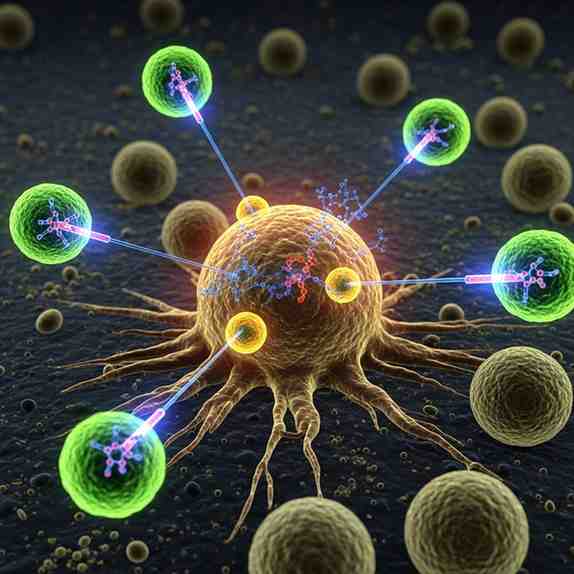
These mutations generate unique protein fragments known as neo-antigens , which are found only on cancer cells. Crucially, some of these neo-antigens are shared among large patient groups, making them attractive targets for immunotherapy.
Turning Tumour Survival into a Vulnerability
Professor Yardena Samuels explained that the study overturns traditional assumptions. Instead of viewing resistance mutations solely as obstacles, the researchers treat them as potential weaknesses. By training immune cells to recognise resistance-related neo-antigens, therapies could precisely attack cancer cells while leaving healthy tissue unharmed.
This approach contrasts with highly personalised immunotherapies, which are costly and difficult to scale.
Evidence from Metastatic Prostate Cancer
The strategy was tested in metastatic prostate cancer , where drug resistance is common. Researchers identified three shared neo-antigens linked to resistance. Laboratory experiments and mouse models showed that immune responses targeting these neo-antigens were effective in suppressing tumour growth.
Important Facts for Exams
-
Drug resistance in cancer is caused by genetic mutations
-
Neo-antigens are cancer-specific protein fragments
-
SpotNeoMet identifies shared resistance-related neo-antigens
-
Study published in Cancer Discovery journal
-
Approach may enable scalable cancer immunotherapies
Month: Current Affairs - January 01, 2026
Category: Science & Technology