Microscopic Analysis Revises Ancient Egyptian Engineering Timeline
A small copper implement excavated in Egypt nearly a century ago has gained renewed scholarly attention after being reinterpreted as a potential bow drill rather than a simple awl. The reassessment, led by Martin Odler , illustrates how modern analytical techniques can reshape long-standing archaeological classifications.
Re-evaluating the Artefact
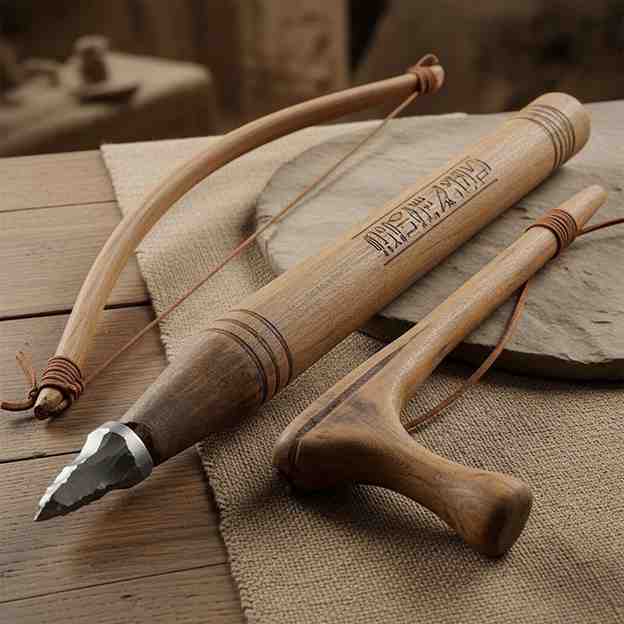
Initially catalogued in the 1920s as a copper awl, the object displayed features that were not thoroughly investigated at the time. Recent microscopic study identified wear patterns indicative of rotational stress , inconsistent with hand-driven piercing tools. The presence of coiled leather thongs attached to the shaft proved particularly significant. These components appear compatible with a cord mechanism used in bow drill systems.
Functional Interpretation
Bow drills operate through a cord wrapped around a spindle, driven by a back-and-forth bow motion. This produces sustained rotary movement, allowing controlled drilling in materials such as wood, bone, or stone. The wear signatures observed align with repetitive spinning rather than linear pressure, supporting the reinterpretation.
Technological Implications
The earliest securely documented rotary drilling tools in Egypt are typically associated with later dynastic phases, including the New Kingdom . If the copper implement predates these examples by approximately two millennia, it suggests earlier adoption of mechanical drilling technologies. Rotary drilling played a crucial role in woodworking, bead production, and furniture craftsmanship.
Archaeological Significance
The discovery underscores the value of revisiting museum collections with advanced imaging and materials analysis. It also highlights how everyday craft technologies contribute to broader narratives of civilisational development.
Exam-Focused Points
-
New Kingdom Period: ~1550–1070 BCE.
-
Bow Drill: Cord-and-bow rotary mechanism.
-
Copper Tools: Dominant before iron usage.
-
Rotary drilling essential for craft industries .
-
Modern microscopy aids artefact reinterpretation .
Month: Current Affairs - February 12, 2026
Category: Ancient History | Archaeology