Why the 100-Metre Rule for Aravalli Hills Has Alarmed Environmental Experts
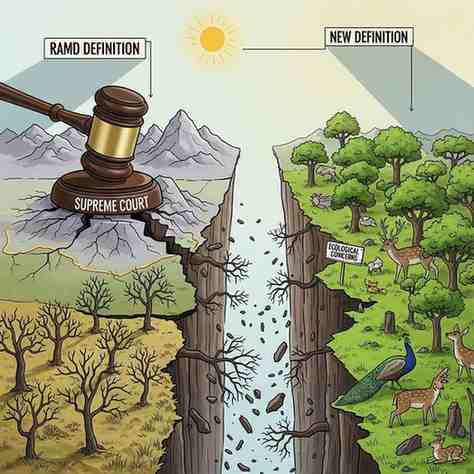
The Supreme Court’s decision to adopt the Centre’s proposed 100-metre elevation benchmark for defining the Aravalli hills has created widespread concern among environmentalists, urban planners and scientific bodies. Although the ruling currently applies only to mining regulations, experts believe the definition could significantly influence future land-use decisions across Delhi-NCR, potentially excluding vast ecologically sensitive ridge systems from legal protection.
What Led to the Concern?
On 21 November 2025 , the Supreme Court endorsed the Environment Ministry’s criteria, instructing the Centre to develop a sustainable mining plan and halting new mining leases until a detailed mapping exercise is completed. However, internal data from the Forest Survey of India indicates that only 1,048 of 12,081 hills above 20 metres meet the 100-metre threshold—less than 9% of the terrain typically identified as part of the Aravallis. This means most ridges, spurs and low-lying slopes may no longer fall under the formal definition.
Why It Matters
The Aravallis act as a crucial environmental buffer, preventing desert expansion, supporting groundwater recharge and moderating air pollution. Low ridges—some just 20 to 80 metres—are essential for maintaining wind-flow patterns, wildlife movement and ecological stability in regions like Gurugram, Faridabad and Alwar. A restrictive height-based definition, experts warn, could weaken protections and expose these fragile landscapes to urbanisation pressures.
Broader Implications
Planners fear the ruling may affect the upcoming NCR Regional Plan 2041 , potentially reducing Natural Conservation Zones if height becomes a primary criterion. This could have long-term impacts on aquifer health, biodiversity corridors and pollution control.
Exam Oriented Facts
-
Supreme Court approved 100-metre elevation rule on 21 November 2025 .
-
Only 9% of mapped Aravalli hills meet the new benchmark.
-
Aravallis act as a climatic barrier and groundwater recharge zone .
-
The ruling may influence NCR Regional Plan 2041 and land-use policy.
Month: Current Affairs - Dec 02, 2025
Category: environmental governance