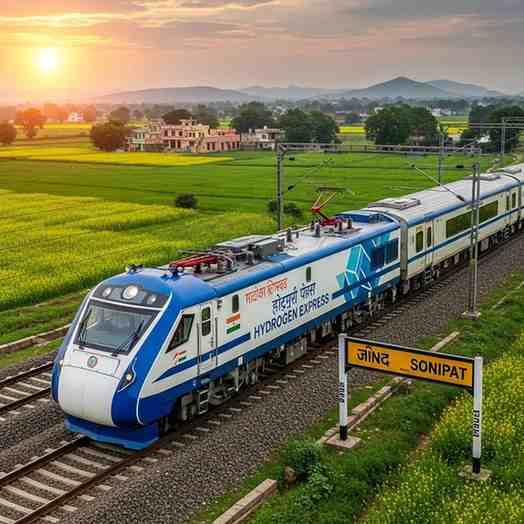
Hydrogen-Powered Trains in India: Technology, Route and Exam Facts
India is poised to enter a new era of green mobility with the launch of its first hydrogen-powered train , scheduled to begin trial operations on the Jind–Sonipat route in Haryana from January 26, 2026 . The initiative marks a significant milestone in Indian Railways efforts to reduce diesel dependence and cut carbon emissions from rail transport.
Green Mobility Milestone for Railways
The inaugural trial run is expected to be flagged off by Prime Minister Narendra Modi . The 90-kilometre Jind–Sonipat section has been chosen as the pilot corridor for hydrogen traction. During trials, the train is expected to operate at speeds of 110–140 kmph , completing the journey in about one hour , nearly half the time taken by existing diesel services on the route.
Technology, Design and Collaboration
The project has been implemented by Indian Railways in collaboration with the Research Designs and Standards Organisation (RDSO) and Spanish firm Green H . The train is powered by electrochemical hydrogen fuel-cell technology , which generates electricity by combining hydrogen and oxygen, emitting only water vapour and steam. Around 900 grams of hydrogen , extracted from nine kilograms of water, can power the train for one kilometre. The onboard system can store nearly 3,000 kg of hydrogen and 7,680 kg of oxygen .
Infrastructure and Passenger Facilities
A dedicated hydrogen production plant has been set up at Jind with Spanish technical support and a 1.5 MW power supply . The coaches, manufactured at the Integral Coach Factory , feature dual driver power cars with 1,200-horsepower engines at both ends. Fuel cells generate 3,750-ampere DC current to run air-conditioning, lighting, digital passenger information systems and automatic doors, alongside modern safety features.
Fares, Capacity and Environmental Impact
The service will cover six stations , with fares expected between ₹5 and ₹25 . Built at an estimated cost of ₹89 crore , the train can carry around 2,500 passengers . Officials note that hydrogen trains offer fuel efficiency comparable to 4.5 litres of diesel per kg of hydrogen , lower maintenance costs and the ability to operate on non-electrified routes , making them a sustainable alternative for the future.
Important Facts for Exams
-
India’s first hydrogen train trial is on the Jind–Sonipat route (Haryana)
-
Hydrogen fuel-cell trains emit only water vapour and steam
-
RDSO is the technical advisory body of Indian Railways
-
Hydrogen trains help reduce diesel use and air pollution
Month: Current Affairs - Jan 07, 2026
Category: Science & Technology | Environment