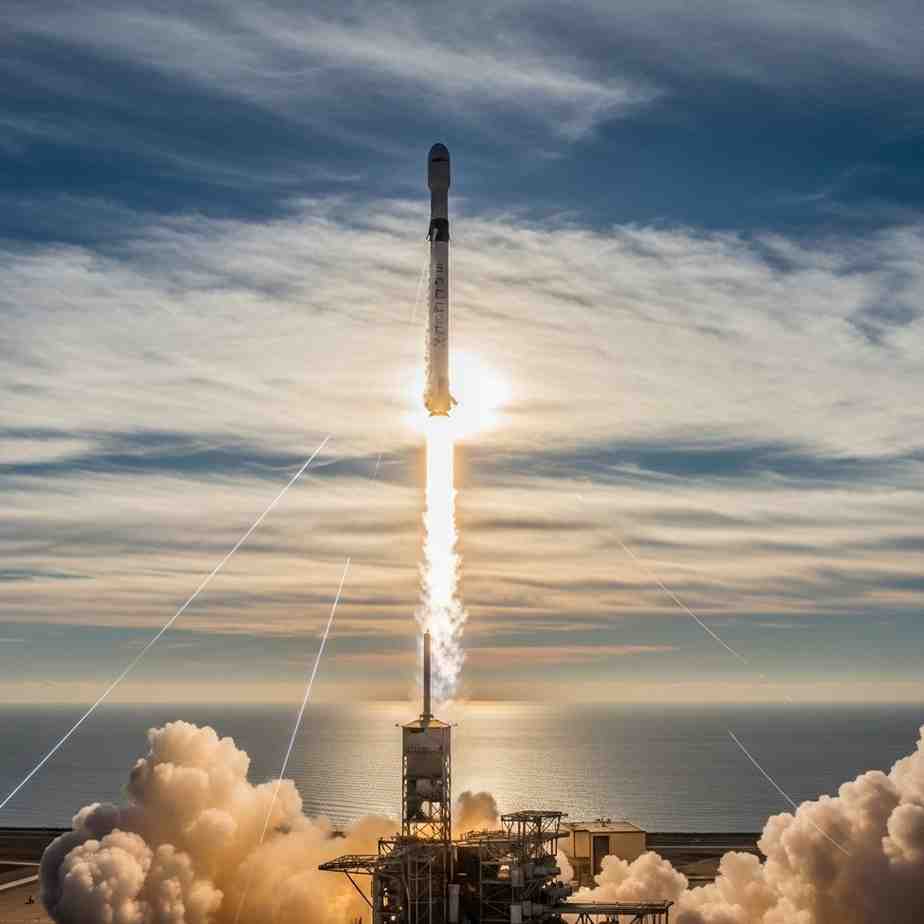
SpaceX Set for Another Starlink Deployment Mission
US space company SpaceX is preparing for another Starlink deployment with the launch of a Falcon 9 rocket from California on February 2. The mission underscores the company’s fast-paced satellite launch cadence as it continues to expand its low Earth orbit broadband constellation for global internet coverage.
Launch Site and Mission Timeline
The Falcon 9 rocket will lift off from Space Launch Complex 4 East at Vandenberg Space Force Base , a launch site primarily used for polar and sun-synchronous orbit missions. The rocket will carry 25 Starlink satellites into low Earth orbit.
The launch window opens at 12:17 pm EST on February 2 and extends until 4:15 pm EST, which corresponds to 8:47 pm IST on February 2 to 12:47 am IST on February 3.
Reusable Booster and Recovery Plan
The mission will employ a flight-proven first-stage booster undertaking its 31st launch, reflecting SpaceX’s emphasis on hardware reuse. Following stage separation, the booster is scheduled to perform a controlled descent and land on the droneship Of Course I Still Love You positioned in the Pacific Ocean. Such recoveries are central to SpaceX’s strategy of lowering launch costs and enabling frequent missions.
Expanding the Starlink Network
After deployment, the 25 satellites will gradually move into their assigned orbital slots, adding capacity to the existing Starlink constellation that already numbers in the thousands. The expanding network is designed to deliver low-latency broadband services, particularly benefiting remote and underserved regions with limited terrestrial connectivity. Depending on atmospheric conditions, residents in parts of Santa Barbara, San Luis Obispo and Ventura counties may hear sonic booms during the booster’s return.
Important Facts for Exams
-
Falcon 9 is a two-stage, reusable orbital launch vehicle developed by SpaceX.
-
Starlink is a low Earth orbit satellite system for global internet connectivity.
-
Vandenberg Space Force Base supports polar and sun-synchronous launches.
-
Reusable boosters significantly reduce the cost of space launches.
Technology and Broader Significance
Falcon 9’s first stage is powered by nine Merlin engines using liquid oxygen and rocket-grade kerosene. It was the first orbital-class rocket designed for routine reusability. Each successful launch and recovery further demonstrates the maturity of reusable launch systems, reshaping the economics of commercial spaceflight and accelerating the deployment of large satellite constellations.
Month: Current Affairs - February 02, 2026
Category: Science & Technology | Space Exploration