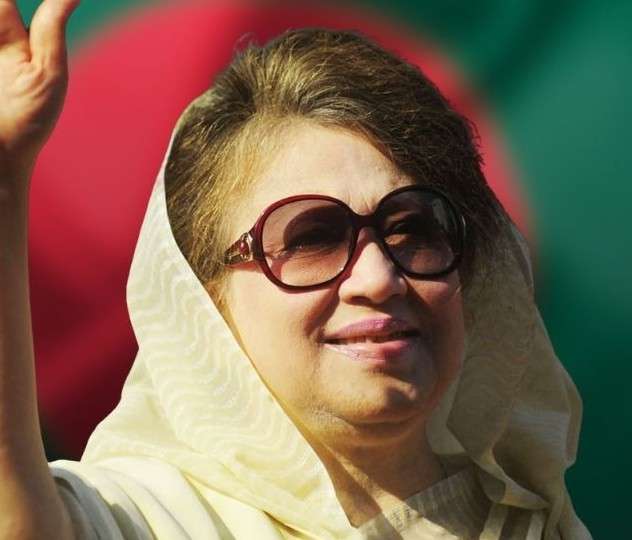
A Defining Figure of Bangladeshi Politics Passes Away
Bangladesh on Tuesday lost one of its most consequential political leaders with the death of former Prime Minister and Bangladesh Nationalist Party (BNP) chairperson Khaleda Zia at the age of 80. Her passing in Dhaka marks the end of a pivotal chapter in the country’s post-independence political history, defined by intense rivalry, democratic transitions, and alternating regimes.
Prolonged Illness and Final Days
Khaleda Zia died after months of critical illness while undergoing treatment at Evercare Hospital in Dhaka. She had been battling multiple chronic health conditions, including cardiac disease, kidney and liver complications, diabetes, respiratory disorders, arthritis, and serious eye ailments. Medical records indicate that she had a permanent pacemaker and had previously undergone cardiac stent procedures. After returning from London in May following advanced medical treatment, her health remained fragile despite continuous intensive care.
Political Rise and Prime Ministerial Tenure
Born in 1945, Khaleda Zia entered active politics following the assassination of her husband, former President Ziaur Rahman , in 1981. She became BNP chairperson in 1984 and rapidly emerged as a dominant opposition leader. In 1991, she led the BNP to victory, becoming Bangladesh’s first woman Prime Minister . She served two non-consecutive terms—1991–1996 and 2001–2006—overseeing key democratic consolidation and economic reforms during politically volatile periods.
Domestic and International Reactions
Interim government chief Muhammad Yunus described her death as a profound national loss. Indian Prime Minister Narendra Modi also expressed condolences, recalling her role in strengthening India–Bangladesh relations. Her death comes amid political flux, with elections expected in 2026 and her son Tarique Rahman recently returning from exile.
Enduring Legacy
Khaleda Zia’s career shaped Bangladesh’s competitive two-party democracy and normalised women’s leadership at the highest political level. Despite illness and legal challenges, she remained a powerful symbol for the BNP. Her death leaves a significant leadership vacuum as Bangladesh approaches another critical electoral phase.
Important Facts for Exams
-
Khaleda Zia was Bangladesh’s first woman Prime Minister
-
She led the Bangladesh Nationalist Party from 1984
-
Her tenure alternated with Sheikh Hasina for over three decades
-
She served as Prime Minister during 1991–1996 and 2001–2006
Month: Current Affairs - December 30, 2025
Category: International Relations