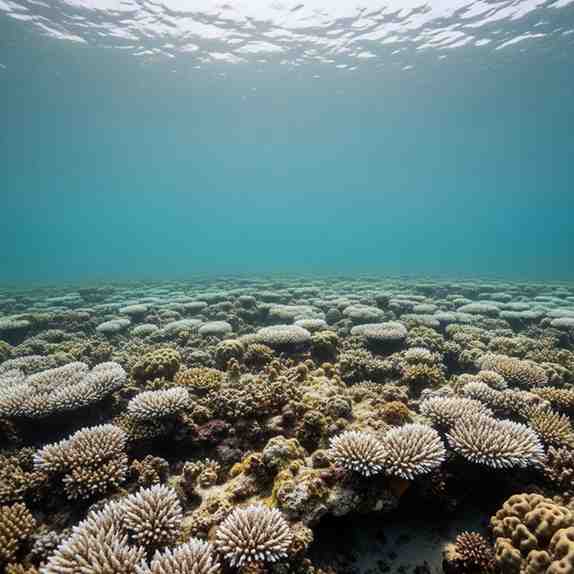
Record Ocean Heat and Rare Disease Cause Severe Coral Loss at One Tree Reef
A lethal combination of prolonged marine heatwaves and a rare coral disease has caused extensive mortality among Goniopora corals at One Tree Reef on Australia’s Great Barrier Reef. Scientists report that nearly 75 per cent of colonies at the study site have died, making it one of the most severe climate-linked coral loss events recorded in recent years.
Bleaching Followed by Rapid Disease Spread
Researchers monitoring 112 coral colonies found that sustained high temperatures triggered widespread coral bleaching , severely weakening the organisms. Soon after, the corals were struck by black band disease , a fast-moving bacterial infection that consumes living coral tissue. Goniopora corals, previously considered relatively heat-tolerant, showed unexpected vulnerability, signalling a troubling shift in coral resilience.
Unprecedented Temperature Extremes
Between late 2023 and early 2025 , sea surface temperatures remained above 28°C for 74 consecutive days , with extreme peaks of 34–35°C . The disease emerged in early 2024 and spread rapidly, infecting over 60 per cent of bleached colonies within weeks. Wider surveys covering 700+ colonies revealed the same pattern: bleaching, disease outbreak and sharp population decline.
Why This Outbreak Is Alarming
Black band disease is usually linked to coastal pollution , yet One Tree Reef lies offshore with limited direct human impact. Notably, the disease affected only bleached Goniopora corals , while other coral species that bleached during the same heat event remained unaffected. This selective impact points to species-specific vulnerability intensified by climate stress.
Broader Global Implications
Scientists warn that this event is part of the fourth global mass coral bleaching episode , now impacting around 84 per cent of reefs worldwide . The loss of large, reef-building corals threatens marine biodiversity, fisheries and natural coastal defences. Experts stress that without rapid global emissions reduction , coral reef ecosystems face accelerating and potentially irreversible decline.
Exam Point
-
75% of Goniopora corals at One Tree Reef died after bleaching and disease.
-
Black band disease infected over 60% of bleached colonies.
-
Temperatures exceeded 28°C for 74 days , peaking at 34–35°C .
-
Study published in Proceedings of the Royal Society B (Dec 2025) .
Month: Current Affairs - December 13, 2025
Category: Climate Change Impacts