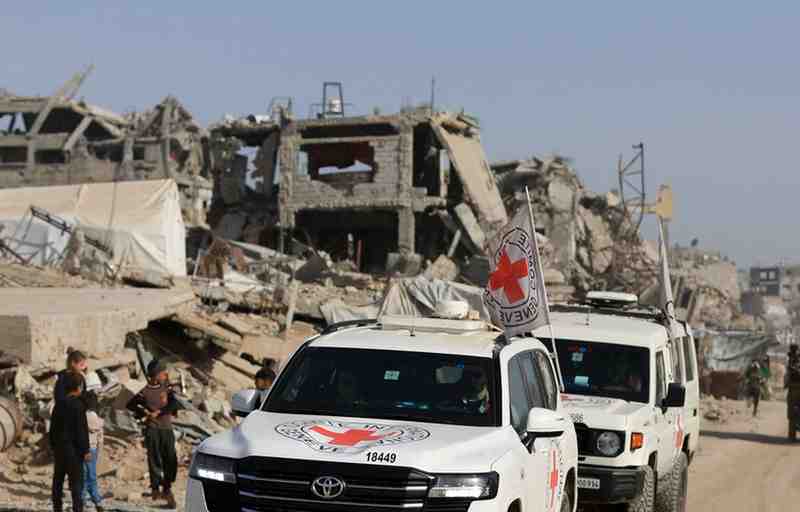
Israel Agrees to Limited Rafah Crossing Reopening Amid Fragile Truce
Israel has agreed to a restricted reopening of the Rafah border crossing between Gaza and Egypt, permitting pedestrian movement only under stringent security conditions. The move comes within the contours of a fragile truce arrangement and follows sustained diplomatic engagement, as international pressure mounts to ease humanitarian distress in Gaza.
Pedestrian-Only Access With Israeli Oversight
In an official statement, Prime Minister Benjamin Netanyahu’s office confirmed that Israel will allow foot passage through Rafah, subject to comprehensive Israeli inspection procedures . The reopening is explicitly conditional. Israel has linked it to the recovery of the remains of the last Israeli hostage believed to be in Gaza and what it termed a “full and sincere effort” by Hamas to locate and return all deceased hostages.
At this stage, vehicular traffic, commercial movement, and large humanitarian convoys remain barred , underscoring the narrow scope of the reopening.
Rafah’s Critical Role in Gaza’s Humanitarian Landscape
The Rafah crossing holds unique strategic importance as Gaza’s only border point not directly controlled by Israel . Historically, it has served as a crucial outlet for civilians seeking medical treatment abroad and for limited humanitarian inflows. Since Israeli forces took control of the surrounding area during the conflict, Rafah has remained shut, worsening shortages of food, fuel, medicines, and medical evacuations for Gaza’s population of over 2.2 million people .
Humanitarian organisations and several governments have repeatedly called for its reopening, warning of an escalating humanitarian catastrophe.
Hostage Issue at the Centre of Negotiations
Israeli officials confirmed ongoing efforts to recover the remains of Ran Gvili , the final Israeli hostage believed to be held in Gaza. Hamas’s armed wing, the Ezzedine Al-Qassam Brigades , has reportedly shared information on the body’s location with mediators. Israel’s decision to partially reopen Rafah is directly tied to progress on this front, reflecting how hostage recovery remains central to ceasefire and humanitarian discussions.
Lingering Questions Over Medical Evacuations
Despite the announcement, uncertainty remains over whether the pedestrian-only opening will allow critically ill or wounded patients to exit Gaza for treatment in Egypt or beyond. Gaza’s newly appointed administrator, Ali Shaath , has argued that Rafah should be opened in both directions, but Israel has yet to confirm any such expansion. Aid agencies caution that without broader access, the humanitarian impact of the reopening may remain limited.
Important Facts for Exams
-
Rafah crossing links Gaza with Egypt and is vital for humanitarian access
-
Gaza has been under an Israeli blockade since 2007
-
The current conflict began after Hamas’s October 7, 2023 attack on Israel
-
Humanitarian access is often linked to hostage negotiations in ceasefire deals
A Fragile Step Amid Ongoing Conflict
The limited reopening of Rafah represents a symbolic but cautious step
Month: Current Affairs - January 27, 2026
Category: West Asia | Israel–Palestine Conflict