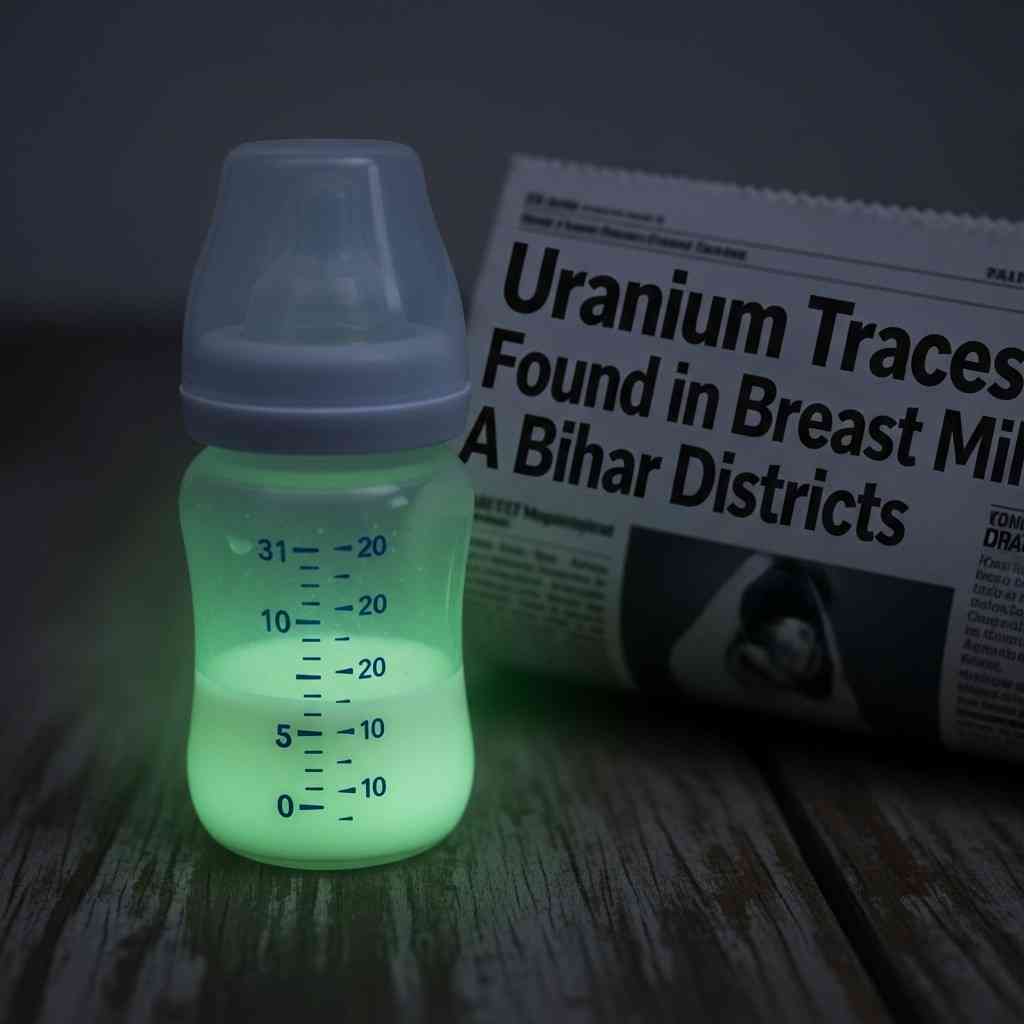
Uranium Detected in Breast Milk Across Bihar Districts
A recent scientific study has detected uranium traces in the breast milk of lactating mothers across several districts of Bihar, prompting fresh concern over groundwater contamination and its potential impact on infant health. Although the concentrations recorded remain below global permissible limits, researchers warn that prolonged exposure calls for closer scrutiny.
Findings Highlight Widespread Uranium Presence
The assessment analysed samples from 40 lactating women , and uranium (U-238) was detected in every sample. Khagaria district reported the highest average concentration, while Katihar recorded the highest single value. Even though absolute levels stayed within international safety benchmarks, the study found that 70% of infants showed a hazard quotient (HQ) above 1 , indicating possible non-carcinogenic health risks over long-term exposure.
Understanding the Health Implications for Infants
Infants are particularly vulnerable to heavy metals due to their developing renal and neurological systems. Possible risks from chronic uranium exposure include impaired kidney function, developmental delays, and reduced cognitive outcomes. Experts, however, stress that breast milk is still safe for infants, as most uranium absorbed by mothers is eliminated via urine rather than concentrated in milk. Therefore, breastfeeding should continue while environmental monitoring is strengthened.
Environmental Sources and Regional Concerns
Uranium naturally occurs in certain rock formations and can enter groundwater through weathering. Industrial activities such as coal combustion, phosphate fertiliser use, and nuclear processes may also elevate contamination levels. Bihar is among several Indian states where uranium has been detected in groundwater, highlighting the need for sustained testing and environmental management.
Exam Oriented Facts
-
Uranium (U-238) detected in all 40 breast milk samples .
-
70% of infants had a hazard quotient above 1 .
-
WHO guideline for uranium in drinking water: 30 µg/L .
-
Uranium contamination reported in 18 Indian states .
Month: Current Affairs - November 24, 2025
Category: Environmental Health, Groundwater Contamination