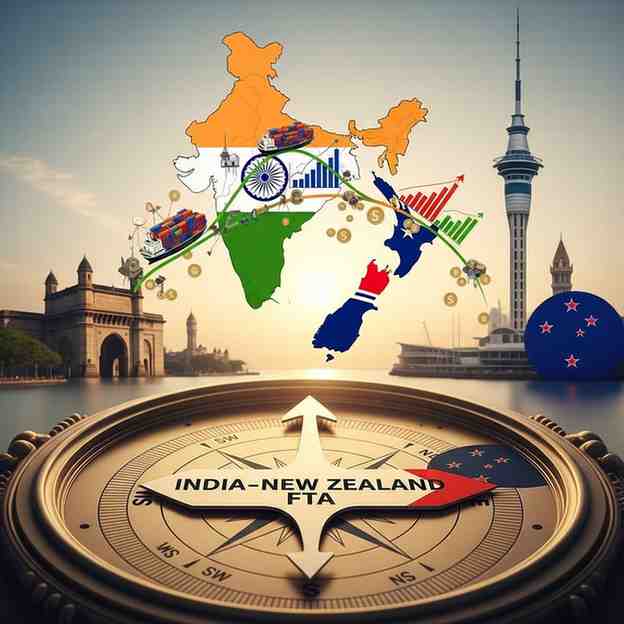
A Measured Evolution in India’s Trade Policy
India’s decision to formally conclude negotiations for a Free Trade Agreement (FTA) with New Zealand marks a quiet but significant shift in New Delhi’s global trade approach. Unlike earlier headline-driven mega trade pacts, this agreement reflects a calibrated strategy shaped by domestic sectoral sensitivities, lessons from past negotiations and a clearer focus on India’s comparative strengths.
Beyond Trade Volumes: Structural Priorities
Bilateral trade between India and New Zealand remains modest, crossing just $2 billion in FY25 . However, the FTA’s ambition to double trade within five years is less about scale and more about structure. The agreement prioritises services, investment and skilled mobility , signalling India’s move away from goods-centric trade frameworks such as the Regional Comprehensive Economic Partnership (RCEP) , which India exited in 2019.
Mobility as a Strategic Gain
A standout feature of the agreement is a dedicated mobility window allowing 5,000 Indian professionals at any given time to access three-year work visas in sectors such as IT, healthcare, education and traditional medicine. This represents a major departure from conservative mobility provisions in other FTAs. Complementing this is New Zealand’s decision to allow uncapped Indian student admissions , with part-time work rights, creating a people-centric economic bridge.
Strategic Exclusions and Domestic Safeguards
Nearly 30 per cent of India’s tariff lines have been excluded from the agreement. Sensitive sectors such as dairy, most animal products and select agricultural items remain protected, reflecting lessons from RCEP and India’s unwillingness to compromise rural livelihoods for market access.
Investment, Timing and Implementation
New Zealand has indicated investment commitments of about $20 billion over 15 years , aligning with India’s focus on attracting capital and integrating into global value chains. If ratified, the FTA may come into force within seven months . Its real success will depend on addressing non-tariff barriers , recognition of qualifications and effective stakeholder outreach, potentially making this pact a template for India’s future trade agreements.
Important Facts for Exams
-
India–New Zealand trade stood at over $2 billion in FY25
-
5,000 Indian professionals granted mobility access under the FTA
-
Nearly 30% tariff lines excluded to protect sensitive sectors
-
India exited RCEP in 2019 over market access concerns
Month: Current Affairs - Dec 25, 2025
Category: Free Trade Agreements