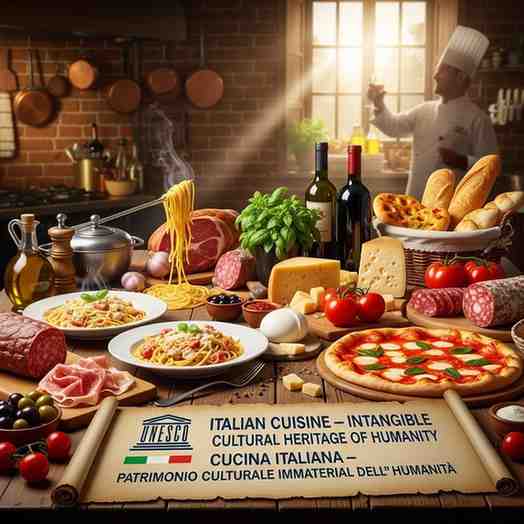
UNESCO Grants Historic Recognition to Italy’s National Food Culture
Italian cuisine has achieved a landmark global honour after being officially inscribed on UNESCO’s Intangible Cultural Heritage of Humanity list . This recognition is historic, as it is the first time an entire national cuisine , rather than a specific dish or culinary technique, has received this status. The decision underlines food as a living cultural tradition deeply embedded in daily life, community bonds, and intergenerational knowledge.
UNESCO Decision and Its Significance
The inscription was approved during the 20th session of UNESCO’s Intergovernmental Committee , held in New Delhi . Unlike earlier food-related recognitions, the listing acknowledges Italy’s complete culinary ecosystem . UNESCO highlighted Italian cuisine as a daily cultural practice shaped by shared meals, regional diversity, and local traditions, rather than a formal or ceremonial heritage.
A Living Food Culture Beyond Recipes
The recognition goes beyond iconic dishes such as pasta or pizza. It encompasses food-related practices like market shopping, seasonal cooking, family dining, food preservation , and agricultural activities including olive pressing, grape harvesting, and tomato canning. The nomination also emphasised sustainability, minimal waste, and the close relationship between food, landscape, and community life—from Alpine dairy traditions to coastal fishing cultures.
Safeguarding Authenticity and Local Economies
UNESCO status strengthens Italy’s efforts to protect the authenticity of its cuisine in global markets, where imitation “Italian-style” products often overshadow genuine produce. The recognition complements existing geographical indication systems and is expected to support rural economies, small-scale farmers, and traditional supply chains , reinforcing the cultural and economic value of local food practices.
Global Influence and Cultural Legacy
Italian cuisine’s worldwide reach, shaped by centuries of migration, played a key role in its recognition. Food traditions carried abroad have become part of everyday cooking across continents. UNESCO’s decision affirms Italian cuisine as a powerful cultural connector, linking identity, memory, and place, and elevating everyday home cooking to a heritage worth preserving.
Exam-Focused Points
-
Italian cuisine is the first entire national cuisine recognised by UNESCO.
-
The decision was taken at UNESCO’s 20th Intergovernmental Committee session in New Delhi.
-
The recognition focuses on everyday food practices , not individual dishes.
-
It promotes sustainability, authenticity, and rural food economies .
Month: Current Affairs - December 18, 2025
Category: Culture, UNESCO