Dandami Madia Culture and the Living Traditions of Chhattisgarh
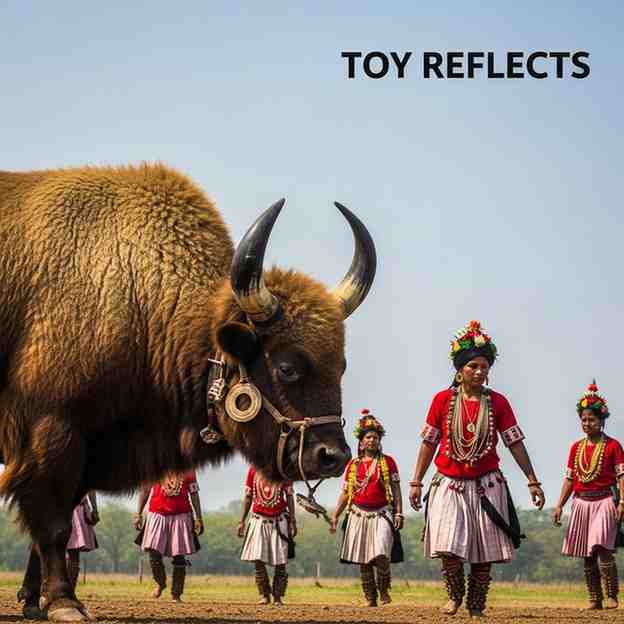
As one enters Jagdalpur , the district headquarters of Bastar in southern Chhattisgarh, a towering sculpture of Bison Horn Maria dancers stands as a striking symbol of the region’s indigenous heritage. The sculpture represents the cultural pride of the Dandami Madia community, whose traditions continue to define the social, spiritual, and artistic life of the forested Bastar plateau.
The Dandami Madia and Gond Heritage
The Dandami Madia, also known as Maria, belong to the broader Gond tribal tradition , historically associated with the Gondwana region of central India. Their settlements across areas such as Darbha, Tokapal, Lohandiguda, and Dantewada reflect a deep dependence on forests for livelihood and belief systems. Nature worship, reverence for ancestral spirits, and collective rituals form the backbone of their community life.
The Bison Horn Maria Dance
The most iconic expression of Dandami Madia culture is the Bison Horn Maria dance , performed during village gatherings and festivals. Men wear distinctive horn-shaped headgear made of bamboo, adorned with bison horns, feathers, and bright cloth strips. Their bodies are decorated with bead necklaces, while brass bells tied around the ankles produce rhythmic sounds in harmony with drums and bamboo flutes.
Women’s Attire and Ritual Meaning
Women dancers wear brightly coloured handwoven saris and elaborate silver and brass ornaments. Jewellery crafted from coins, armlets, waistbands, and occasionally brass crowns enhances the ceremonial grandeur. Their graceful movements symbolise hunting traditions, seasonal cycles, and the community’s close bond with nature. Performances reach their peak during the Madia festival , when families from distant hamlets gather to celebrate shared identity.
Living Tradition in Modern Times
Despite social change and modern influences, the Bison Horn Maria dance remains a living tradition. It continues to embody cultural continuity, collective memory, and resilience, serving as a powerful expression of Dandami Madia identity in contemporary Bastar.
Exam-Focused Points
-
Dandami Madia are part of the Gond tribal tradition of central India.
-
Bison Horn Maria dance is associated with the Bastar region of Chhattisgarh .
-
Horn-shaped headgear reflects hunting heritage and forest-based life.
-
The Madia festival is the main occasion for large-scale performances.
Month: Current Affairs - December 18, 2025
Category: Indian Culture, Tribal Communities