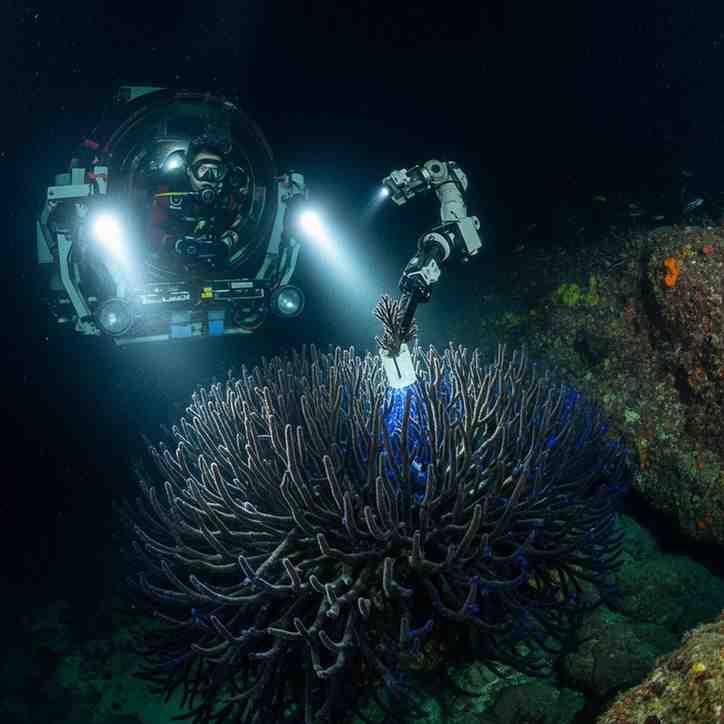
Rare 400-Year-Old Black Coral Highlights Fragility of Deep-Sea Ecosystems
Marine researchers have identified an exceptionally large and ancient black coral colony in the deep ocean waters near Fiordland , offering valuable insights into long-lived deep-sea ecosystems. The discovery underscores the ecological richness of the ocean floor while drawing attention to the urgent need to protect fragile marine habitats from human disturbance.
Discovery During Deep-Sea Exploration
The coral was located during a scientific dive led by researchers from Victoria University of Wellington . Standing over 13 feet tall and spreading nearly 15 feet wide, the specimen is believed to be between 300 and 400 years old. This makes it the largest black coral ever documented in New Zealand waters and among the most significant deep-sea coral finds globally.
Why the Discovery Matters Scientifically
According to marine scientists, black corals usually grow very slowly and remain relatively small even after decades. The sheer size and age of this coral indicate centuries of stable ocean conditions. Such ancient corals act as biological archives, preserving information about long-term changes in ocean chemistry, temperature, and biodiversity. They also serve as breeding and shelter sites for slow-growing deep-sea organisms.
Conservation Significance and Legal Protection
The finding has reinforced calls for stronger marine conservation measures. Mapping the locations of large coral colonies can help prevent accidental damage caused by anchoring, bottom trawling, or seabed infrastructure development. In New Zealand, black corals are legally protected, making it unlawful to collect, harm, or disturb them. Despite their name, living black corals often appear white due to their outer tissue, while the internal skeleton is black.
Ecological Role and Global Importance
Black corals are typically found at great depths and play a vital role in sustaining deep-sea biodiversity. They provide complex structures that support fish, invertebrates, and microorganisms. Historically, black corals have been used in jewellery and traditional medicine in some cultures, contributing to their overexploitation. Their extreme longevity and slow growth make recovery from damage almost impossible, highlighting the importance of proactive conservation.
Important Facts for Exams
-
The largest recorded black coral in New Zealand was found near Fiordland.
-
The coral is estimated to be 300–400 years old .
-
Black corals are slow-growing and long-lived deep-sea species .
-
They provide habitat and breeding grounds for marine organisms.
-
Black corals are legally protected under conservation laws in New Zealand.
Month: Current Affairs - January 16, 2026
Category: Environment & Ecology | Biodiversity Conservation