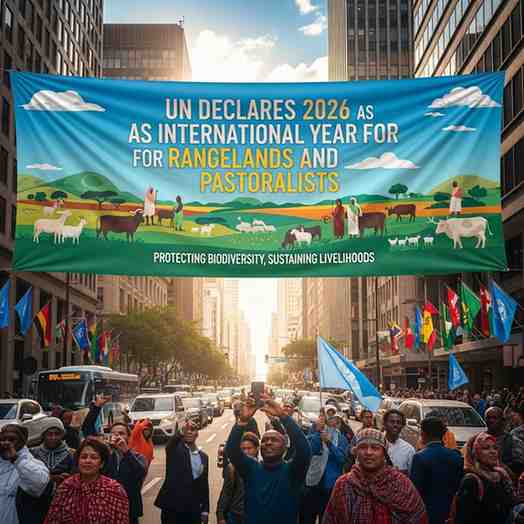
Why Grasslands and Pastoralists Are Central to Global Climate Action
The United Nations has declared 2026 as the ‘International Year for Rangelands and Pastoralists’ , drawing global attention to ecosystems that are critical for climate stability yet remain largely overlooked in climate policy. The decision comes amid growing concern that global climate action remains overwhelmingly forest-centric, despite strong scientific evidence that grasslands and savannahs are equally vital for carbon storage, biodiversity conservation, and climate resilience.
Scientific Push to Broaden Climate Focus
In 2022, an international group of scientists urged parties to the UN Framework Convention on Climate Change (UNFCCC) to expand climate goals beyond forests and include all biomes, particularly grasslands and savannahs. Their open letter, published in Science , highlighted that these ecosystems can act as significant carbon sinks. However, years later, climate negotiations under the UNFCCC continue to prioritise forests, leaving rangelands marginalised.
COP30 and Forest-Centric Climate Action
This imbalance was evident during COP30 held in Belém, Brazil. With the host country home to much of the Amazon basin, forests dominated discussions. Initiatives like the Tropical Forest Forever Facility (TFFF) attracted major financial commitments to protect forests. Yet COP30 concluded without a clear climate roadmap, reinforcing concerns that non-forest ecosystems remain outside mainstream climate strategies.
Grasslands Under Climate and Policy Stress
Grasslands are among the world’s most threatened ecosystems, facing pressure from agricultural expansion, plantations, invasive species, mining, and fossil fuel extraction. Fire suppression policies and the sidelining of Indigenous land management practices—such as controlled burning and traditional grazing—have often increased wildfire intensity and carbon emissions. In Australia, Indigenous-managed desert grasslands face climate-driven droughts, flash floods, and invasive buffel grass that burns more intensely than native species.
Global and Indian Policy Implications
Similar risks confront Brazil’s Cerrado savannah, which supports key river systems but faces higher land-use pressure than the Amazon. Experts argue that grasslands must be integrated into national climate plans and the Paris Agreement’s nationally determined contributions. In India, grasslands fall under multiple ministries with overlapping mandates. Recognising them as carbon sinks within India’s climate framework could strengthen mitigation efforts while safeguarding pastoral livelihoods.
Important Facts for Exams
-
2026 is the UN-designated International Year for Rangelands and Pastoralists
-
Grasslands and savannahs are major but under-recognised carbon sinks
-
UNFCCC focuses on global climate change mitigation and adaptation
-
UNCCD emphasises land degradation neutrality and rangeland protection
Month: Current Affairs - January 08, 2026
Category: Environment | Climate Change