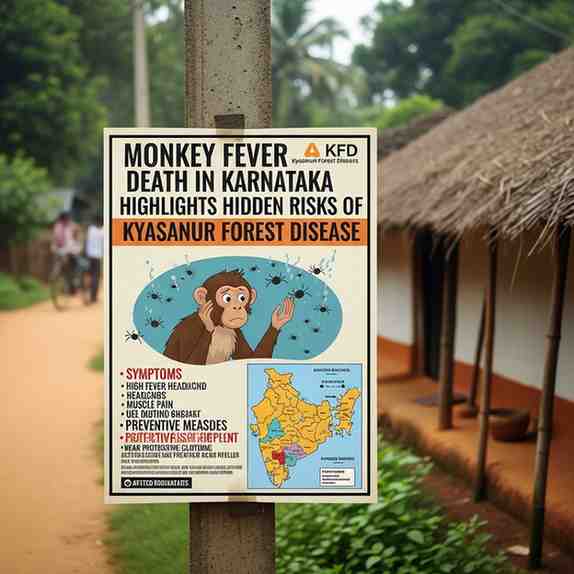
Rare KFD Death Raises Public Health Concerns
The death of a 29-year-old man from Tirthahalli in Karnataka has drawn renewed attention to Kyasanur Forest Disease (KFD) , a tick-borne viral infection commonly referred to as monkey fever. The patient succumbed to the illness on January 28 at a hospital in Udupi , despite early diagnosis and prompt referral, an outcome that health officials have described as unusual.
Why the Case Stands Out
According to the Karnataka health department, the infection was confirmed within a day of the onset of symptoms, and the patient remained clinically stable during the initial phase of treatment. Typically, early detection of KFD leads to recovery in most cases. However, his sudden deterioration underscores the unpredictable clinical course of the disease and the need for continued vigilance, even when early medical care is provided.
Transmission Pathways of Kyasanur Forest Disease
Despite its popular name, monkey fever does not spread directly from monkeys to humans. KFD is transmitted primarily through the bite of infected forest ticks, especially Haemaphysalis spinigera . Humans may also contract the virus by handling sick or dead infected animals, including monkeys, squirrels and rodents. Importantly, there is no evidence of human-to-human transmission.
The disease is endemic to forested belts of Karnataka and neighbouring regions. Cases typically begin appearing after the monsoon, with incidence rising from October and peaking between January and April.
Symptoms and Potential Complications
The incubation period of KFD ranges from three to eight days. Initial symptoms include sudden onset of high fever, chills and severe headache. In more severe cases, patients may develop bleeding from the nose, gums or gastrointestinal tract, along with low blood pressure and thrombocytopenia. Neurological complications—such as muscle stiffness, tremors, altered reflexes, mental confusion and visual disturbances—have also been reported.
The case fatality rate is estimated to range between 2 and 10 per cent, depending on factors such as early diagnosis, supportive care and overall health of the patient.
Important Facts for Exams
-
Kyasanur Forest Disease is a tick-borne viral haemorrhagic fever
-
The primary vector is Haemaphysalis spinigera forest tick
-
There is no human-to-human transmission of KFD
-
The disease is endemic to forested regions of Karnataka
Prevention and Public Health Measures
There is no specific antiviral therapy for KFD, and treatment remains supportive, focusing on hydration, management of bleeding and close monitoring of vital parameters. Public health experts advise people in endemic regions to avoid forest exposure during peak seasons, wear protective clothing, use tick repellents and never touch dead animals.
Early medical consultation following fever after forest exposure remains the most critical step in preventing severe complications. The recent fatality serves as a reminder that even lesser-known zoonotic diseases can pose serious risks if ecological and human health factors intersect.
Month: Current Affairs - February 01, 2026
Category: Health | Zoonotic Diseases