Rare Ant Flies Discovered Across Urban and Natural Landscapes
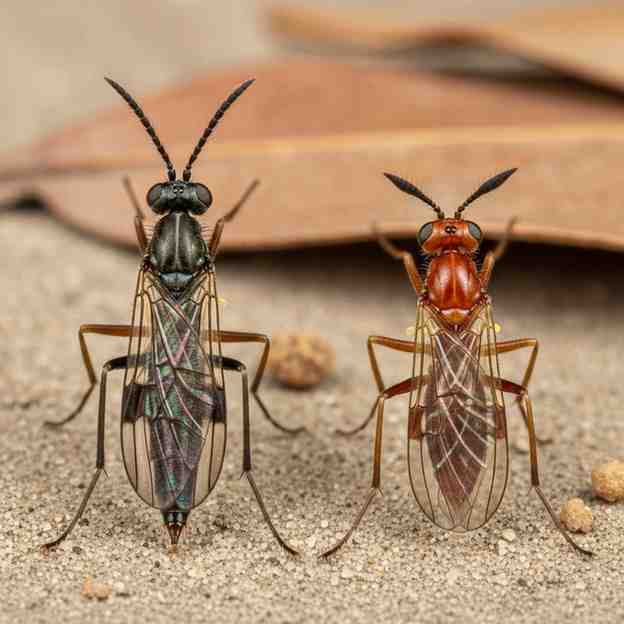
Researchers from Kerala and Tamil Nadu have identified two previously unknown species of ant flies from India, revealing that both heavily human-influenced urban forests and ecologically rich natural regions continue to harbour rare and specialised biodiversity. The discoveries highlight the overlooked ecological value of fragmented green spaces as well as protected biodiversity hotspots.
New Species and Their Specialised Lifestyle
The newly described species — Metadon ghorpadei and Metadon reemeri — belong to the subfamily Microdontinae under the family Syrphidae. These flies are among the most elusive insects due to their unique life cycle. Their larvae develop inside ant nests, feeding on ant brood, a highly specialised ecological association known as myrmecophily. This dependence on ant colonies makes Microdontinae flies extremely difficult to detect and study. Prior to this research, only six species of the genus Metadon had been documented from India.
Findings from the Delhi Ridge and the Western Ghats
Metadon ghorpadei was recorded from the Delhi Ridge , an ecologically significant extension of the Aravalli Range . Despite being surrounded by dense urban development and reduced to nearly one per cent of its original area, the ridge continues to sustain rare insect fauna. The species was found in a patch of moderately dense vegetation within a largely thorny scrub forest, underscoring the conservation value of urban green spaces.
The second species, Metadon reemeri , was discovered in the Western Ghats , specifically in the Siruvani hills of Tamil Nadu. The Western Ghats are globally recognised for high levels of endemism and ecological diversity, and the discovery reinforces their status as a reservoir of undocumented insect life.
Scientific Validation and Taxonomic Contribution
The study was carried out by researchers from Amrita Vishwa Vidyapeetam and Kerala Agricultural University . Using a combination of detailed morphological analysis and DNA sequencing, the team confirmed the distinct identity of both species. The findings were published in the international taxonomic journal Zootaxa . In addition to describing the new species, the study also reviewed and redescribed six previously known Indian Metadon species, improving taxonomic clarity for future research.
Imporatnt Facts for Exams
-
Microdontinae larvae live inside ant nests, a behaviour known as myrmecophily
-
Delhi Ridge is an extension of the ancient Aravalli hill system
-
Western Ghats is a global biodiversity hotspot with high insect endemism
-
Only about 27 Microdontinae species are known from the Indian subcontinent
Conservation Implications and Future Research
Researchers caution that urban conservation policies often focus on tree cover rather than habitat-specific biodiversity, placing rare insect groups at risk. While the Western Ghats enjoy relatively stronger protection, many insect taxa remain poorly surveyed. Given that Microdontinae species are globally considered rare or threatened due to their specialised habitat needs, the scientists recommend targeted insect surveys, habitat mapping, invasive species control, and restoration of native vegetation. They also call for expanded molecular phylogenetic studies across underexplored regions such as the Vindhya range, Deccan Plateau, and northern plains.
Month: Current Affairs - January 22, 2026
Category: Environment & Ecology | Species Discovery