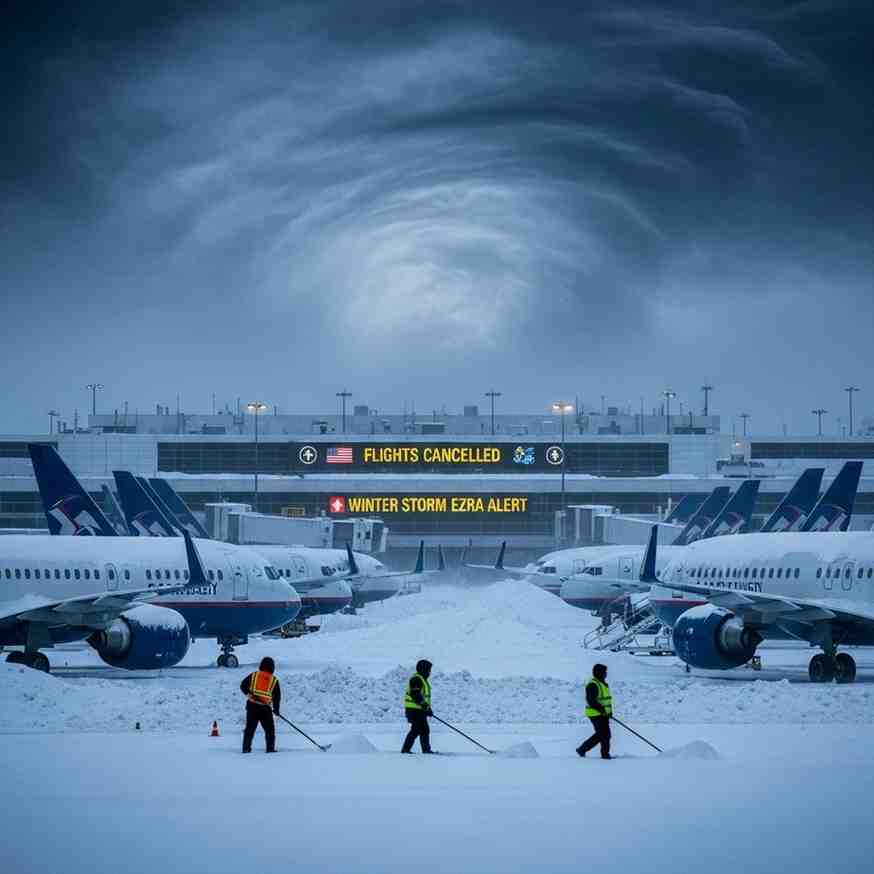
Bomb Cyclone Batters the United States
A rapidly intensifying winter storm evolved into a powerful bomb cyclone across large parts of the United States on Monday, unleashing blizzard conditions, damaging winds and widespread power outages just days before the New Year holiday. Named Winter Storm Ezra , the system caused major disruptions across the Midwest, Great Lakes and East Coast during one of the busiest travel periods of the year.
Widespread Travel Disruptions
Air travel faced severe disruption as airports struggled with high winds and low visibility. According to FlightAware , nearly 6,000 flights were delayed and over 750 cancelled by Monday afternoon. Since Friday, the storm has triggered more than 3,600 cancellations nationwide. Major carriers such as American Airlines , United Airlines , Delta Air Lines and JetBlue waived change fees to assist stranded passengers.
Understanding a Bomb Cyclone
A bomb cyclone occurs when atmospheric pressure drops by at least 24 millibars within 24 hours, leading to explosive storm intensification. Meteorologists said Ezra strengthened when frigid Arctic air collided with warm southern air, producing temperature drops of nearly 50°F in parts of the central US.
Extreme Weather Impacts
Blizzard conditions hit the Plains and Great Lakes, with wind chills plunging to –30°F in northern states. Snowfall exceeded two feet in parts of Michigan, while waves on Lake Superior reached nearly 20 feet. Over 350,000 customers lost power nationwide, and flooding risks increased along Lake Erie .
Important Facts for Exams
-
Bomb cyclones involve rapid pressure drops within 24 hours
-
They can produce hurricane-force winds and blizzards
-
Lake-effect snow intensifies near large water bodies
-
Arctic air interactions drive extreme winter storms
Month: Current Affairs - January 03, 2026
Category: Geography | Climatology