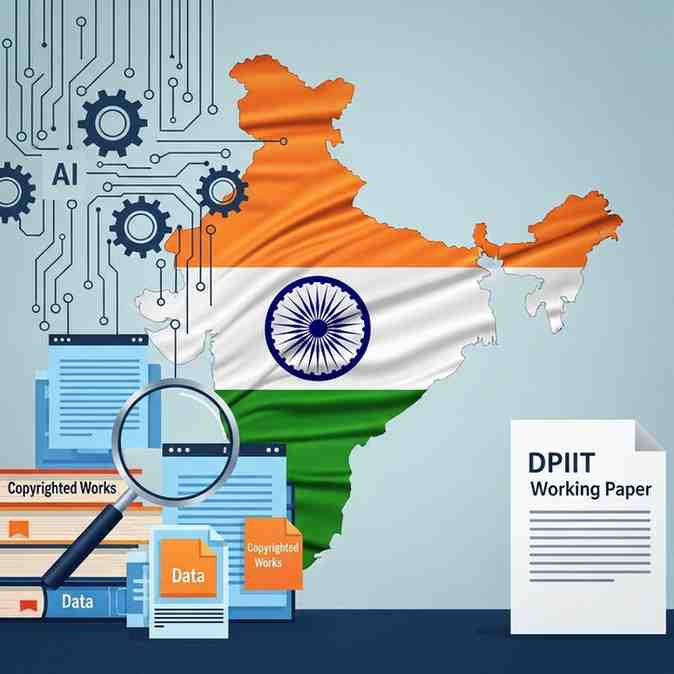
DPIIT Working Paper Proposes Default Access for AI Training and a New Royalty Framework
A government working paper has proposed a major overhaul of how India governs the use of online content for training large language models (LLMs) . The draft, prepared under the Department for Promotion of Industry and Internal Trade (DPIIT) , recommends granting AI developers automatic access to publicly available web material while introducing a new royalty distribution mechanism to compensate content creators.
Key Proposals in the Draft Framework
The committee argues that publishers should not be allowed to prevent AI systems from mining non-paywalled content. Instead of individual negotiations, a non-profit royalty-collecting organisation —similar to a copyright society—would gather payments from AI companies and distribute them to rightsholders, including those who are not registered members. The model aims to simplify compliance while ensuring that creators receive compensation for the use of their works in AI training datasets.
Nasscom’s Objections and Innovation Concerns
Industry body Nasscom dissented strongly, warning that compulsory royalty payments would act like a “tax on innovation.” It advocated for free mining of all non-restricted content and insisted that publishers should retain the right to opt out of AI training entirely. The committee rejected these arguments, noting that many small creators lack the ability to enforce exclusions effectively.
Copyright Disputes and the Push for Statutory Clarity
The proposal arrives amid rising litigation, including a case filed by the Digital News Publishers Association against an AI developer. The paper argues that a statutory model—similar to compulsory licensing in radio broadcasting —would reduce uncertainty and streamline data access for AI systems.
Royalty Sharing and Expected Debate
Royalties would be allocated based on factors like web traffic and publisher credibility , though both AI firms and content creators are expected to challenge aspects of the framework. Any conflicts would be subject to judicial appeal, providing oversight as India shapes a long-term AI–copyright governance regime.
Exam Point
-
DPIIT committee proposes default access to publicly available web content for AI training.
-
A non-profit body would collect and distribute royalties to creators.
-
Nasscom opposed compulsory royalties, citing innovation concerns.
-
Framework draws inspiration from India’s compulsory licensing model used in radio music rights.
Month: Current Affairs - December 12, 2025
Category: AI Governance, Copyright Law