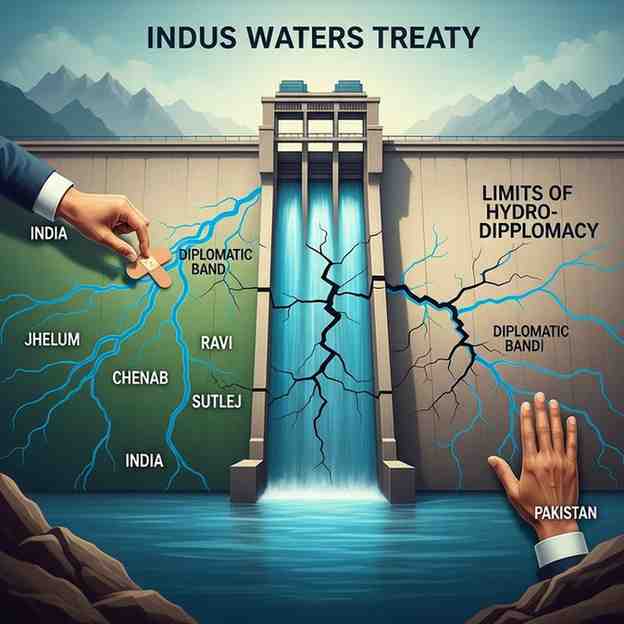
seasons. This explains Islamabad’s strong resistance to reopening the treaty. Some Pakistani voices have even proposed expanding cooperation to shared aquifers, arguing that groundwater is a joint resource.
India, however, has strong reasons to reject such expansion. Extending cooperation to sub-surface waters would create new legal and strategic vulnerabilities, especially when Pakistan has obstructed even existing mechanisms. Moreover, India’s own position as a lower riparian—particularly vis-à-vis China on the Brahmaputra—demands consistency in its water diplomacy.
Rhetoric versus realism
The Indus Waters Treaty remains deeply unpopular in parts of Jammu and Kashmir, where it is seen as constraining development. Yet it has survived wars, crises and regime changes, making it one of the world’s most durable water-sharing agreements.
That durability should not obscure reality. India’s capacity to use water as a coercive instrument against Pakistan is limited. Political rhetoric may resonate domestically, but it risks creating public misconceptions about what is technically and legally possible.
What India needs now is clarity—both strategic and public. A transparent accounting of how much water India actually forgoes under the treaty, and how much it could realistically use even if the treaty were suspended, would ground the debate in facts rather than emotion.
Water, unlike politics, follows geography. And in a region where rivers are lifelines, realism—not symbolism—must guide policy.
Month: Current Affairs - January 18, 2026
Category: