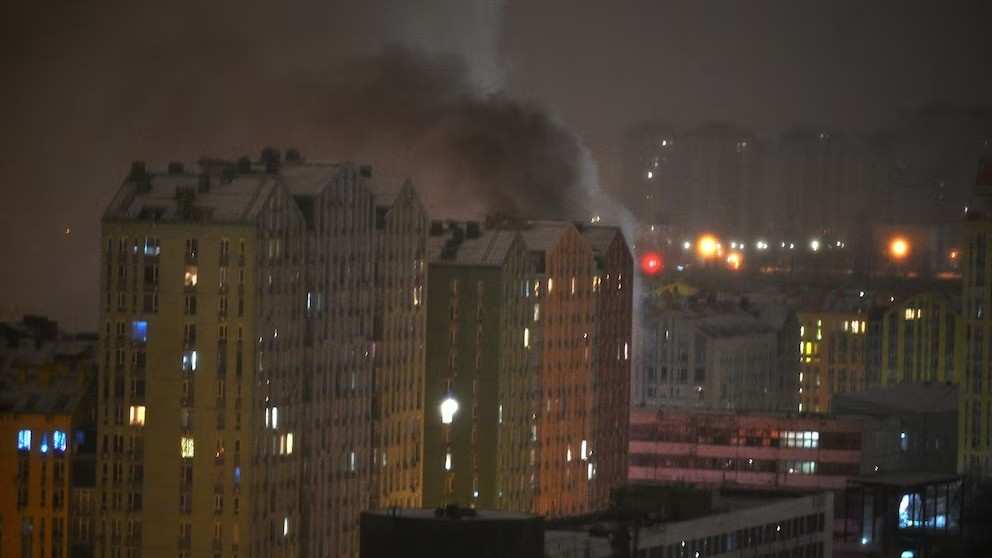
Oreshnik Missile Strike Signals Escalation in Russia–Ukraine War Ahead of Fourth Anniversary
The Russia–Ukraine conflict has entered a more dangerous phase after Moscow confirmed the use of its advanced Oreshnik ballistic missile in an overnight strike on Ukraine. Coming just weeks before the war approaches its fourth anniversary, the attack has intensified fears about European security and highlighted the evolving nature of Russia’s military strategy.
Russia’s Latest Missile Strike
On January 9, Russia announced that it had deployed the Oreshnik missile as part of a large-scale assault targeting Ukrainian energy infrastructure and drone production facilities . Ukrainian authorities reported casualties in Kyiv and damage to critical installations, underscoring the strike’s immediate human and economic impact.
The attack followed Russian claims that Ukraine had carried out a drone strike on the residence of Vladimir Putin —an allegation strongly denied by Kyiv and dismissed by the United States. The sequence of events points to a rapidly escalating cycle of claims, counterclaims, and retaliatory actions.
What Is the Oreshnik Missile?
“Oreshnik,” meaning hazel nut in Russian, is described by Moscow as a nuclear-capable intermediate-range ballistic missile (IRBM) . Russian sources claim the missile can reach speeds of up to Mach 10 , making interception extremely difficult for existing air defence systems.
Defence analysts believe Oreshnik is a variant of the RS-26 , which itself is derived from the RS-24 Yars intercontinental ballistic missile . It is also thought to be capable of carrying multiple independently targetable re-entry vehicles (MIRVs) , allowing a single missile to strike multiple targets simultaneously—an attribute more commonly associated with strategic weapons.
Strategic and Security Implications
Ukrainian officials have warned that the deployment of such a missile near Europe’s borders represents a serious escalation. Foreign Minister Andrii Sybiha stated that the use of Oreshnik threatens not only Ukraine but also regional and transatlantic security .
Russia had reportedly used the missile earlier in November 2024 , though Ukrainian sources claimed it carried dummy warheads at that time. The latest strike, however, suggests a more assertive posture, signalling Moscow’s willingness to employ advanced missile systems as part of its battlefield messaging and deterrence strategy.
Global Reactions and Diplomatic Context
The timing of the strike is particularly sensitive as US President Donald Trump has been attempting to broker a peace deal between Moscow and Kyiv. Ukrainian President Volodymyr Zelenskyy stated that Russia launched 13 ballistic missiles , including Oreshnik, alongside cruise missiles and hundreds of drones during the assault.
Ukrainian leaders have urged stronger international responses, especially from the United States and European allies, warning that failure to act decisively could encourage further escalation by Moscow.
Why This Escalation Matters
The reported use of an advanced IRBM blurs the line between conventional battlefield weapons and strategic deterrence tools. Analysts caution that such developments increase the risk of miscalculation, widen the conflict’s geopolitical implications, and place greater pressure on Europe’s security architecture.
Quick Facts for Exams
-
Oreshnik is an intermediate-range ballistic missile (IRBM) reportedly capable
Month: Current Affairs - January 10, 2026
Category: military escalation, strategic implications