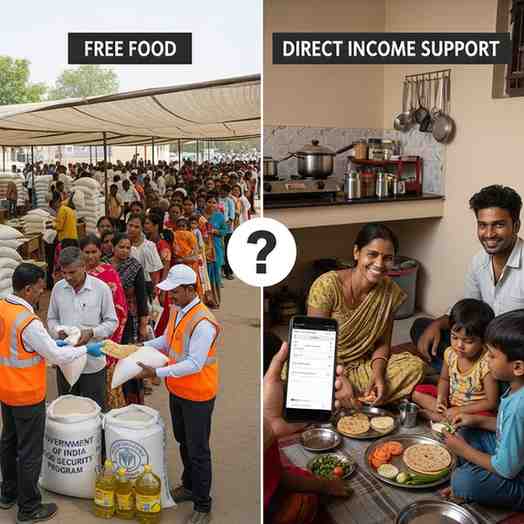
A phased, opt-in transition allowing households to choose between grain and cash for an initial 12–18 months would safeguard vulnerable populations. Regions with weak retail markets or price volatility could continue with in-kind support until local supply chains mature.
Food coupons could serve as an interim solution in areas with limited banking or retail penetration. Indexing cash transfers to food inflation would protect households during price spikes — a flexibility not always guaranteed under in-kind distribution.
The Broader Fiscal and Developmental Dividend
Replacing grain distribution with income support pegged to economic cost would substantially reduce leakages, storage losses and logistics overheads. The fiscal space freed could be redirected toward nutrition diversification, cold chains, modern warehousing and agro-logistics — investments that strengthen food security in the long run.
Equally important, such a shift would move welfare from paternalistic provisioning toward empowered choice, reinforcing dignity and agency at the household level.
Conclusion: Reforming Welfare Without Retreating from Security
India’s success in feeding hundreds of millions should not lock it into an inefficient delivery model indefinitely. The debate today is not about whether the State should guarantee food security, but about how it can do so more effectively.
A carefully designed transition from grain to cash — voluntary, indexed, and technology-enabled — offers a fiscally prudent and socially progressive path. It preserves food security while modernising welfare delivery for a country that can no longer afford leakage as the price of compassion.
Month: Current Affairs - December 28, 2025
Category: