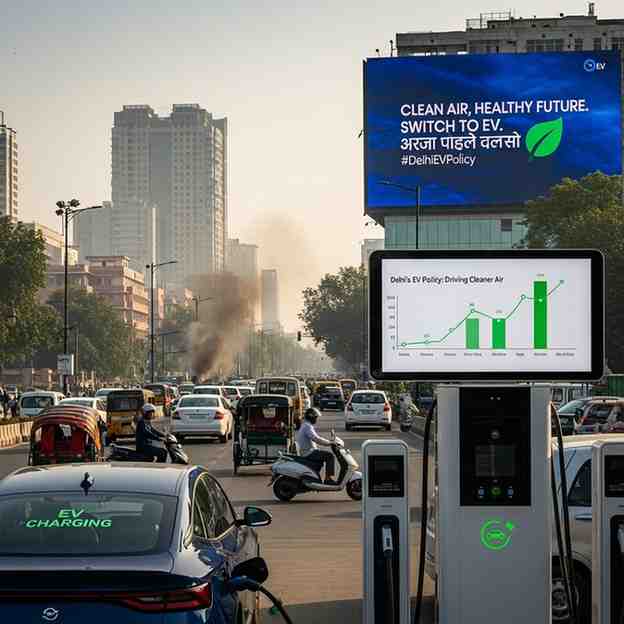
The capital sits within a shared air basin covering large parts of the National Capital Region, where pollution generated outside Delhi routinely drifts in.
This makes regional coordination essential. States such as Uttar Pradesh have adopted more aggressive EV and hybrid policies, combining tax exemptions, purchase incentives and charging-infrastructure subsidies. Such efforts expand charging networks and accelerate adoption across the NCR, amplifying clean-air benefits. Delhi’s policy will be more effective if aligned with these regional strategies.
Why Subsidy Design Matters
Public spending on EVs must prioritise pollution reduction rather than headline adoption numbers. Subsidies should be targeted, time-bound and outcome-oriented.
Priority areas include:
-
High-mileage commercial fleets
-
Public transport buses and last-mile delivery vehicles
-
Replacement of old diesel vehicles, where emission reduction per rupee is highest
At the same time, stronger disincentives for internal combustion engine vehicles—such as higher registration fees, congestion pricing and strict end-of-life enforcement—are necessary. Without these push factors, EVs risk becoming a parallel fleet rather than a substitute for polluting vehicles.
From EV Adoption to Clean-Air Outcomes
Delhi’s experience offers a broader policy lesson for Indian cities: clean mobility is not merely about accelerating EV sales, but about restructuring the entire transport ecosystem. EVs are an essential tool, but they must be paired with aggressive scrappage, regional cooperation and enforcement that targets the worst polluters.
The revamped EV policy presents an opportunity to correct earlier design flaws. Its success will not be measured by EV numbers alone, but by whether it finally forces the exit of Delhi’s dirtiest vehicles and delivers measurable improvements in air quality.
Month: Current Affairs - December 28, 2025
Category: