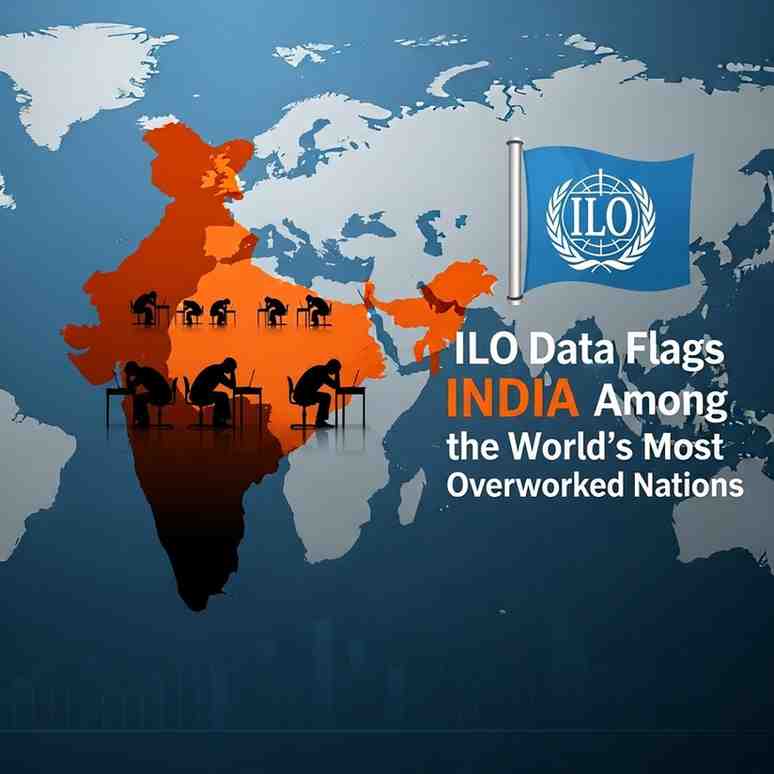
India Ranks High in Global Working-Hours Index
India has been identified as one of the world’s most overworked countries, according to the latest data released by the International Labour Organization (ILO) . The findings reveal that Indian workers spend significantly longer hours at work compared to most global peers, raising concerns over burnout, mental health, and the sustainability of productivity in a fast-growing economy.
Key Findings from the ILO Report
The ILO’s 2024 assessment shows that Indian workers average 45.7 hours per week , placing the country among nations with the longest working hours worldwide. This figure is notably higher than the averages in developed economies, where stronger labour laws, automation, and productivity gains have led to reduced work hours. India now stands alongside countries such as Bangladesh, Mongolia, and Iran in terms of work intensity.
Why Do Indians Work Longer Hours?
Experts attribute India’s long working culture to multiple factors. A large informal workforce, job insecurity, and intense competition in both blue- and white-collar sectors push employees to work extended hours. In urban and corporate settings, digital tools have erased clear boundaries between office and home, making late-night emails and weekend calls commonplace. Additionally, social norms often associate long hours with dedication and professional success.
Policy Response and Emerging Debate
The ILO data has reinvigorated discussions around labour reforms, particularly the proposed Right to Disconnect Bill 2025 . The bill aims to limit work-related communication beyond official working hours. Supporters argue that such regulation is essential to protect mental well-being, while opponents warn it could reduce flexibility in globally connected industries such as IT and services.
Economic and Health Implications
Research consistently shows that excessive working hours can reduce productivity, increase health risks, and raise long-term economic costs. As India aspires to become a leading global economy, policymakers face the challenge of balancing competitiveness with humane work standards. The ILO’s findings underline the need for reforms that promote sustainable productivity rather than prolonged work endurance .
Exam Oriented Facts
-
India’s average weekly working hours: 45.7 hours (ILO).
-
ILO is a UN specialised agency focused on labour standards.
-
India ranks with Bangladesh and Mongolia in long-hour work trends.
-
Right to Disconnect Bill 2025 seeks to regulate after-hours work contact.
Month: Current Affairs - December 14, 2025
Category: labour reforms, work-life balance