H3N2 Influenza Re-Emerges as Major Driver of Seasonal Flu Waves Worldwide
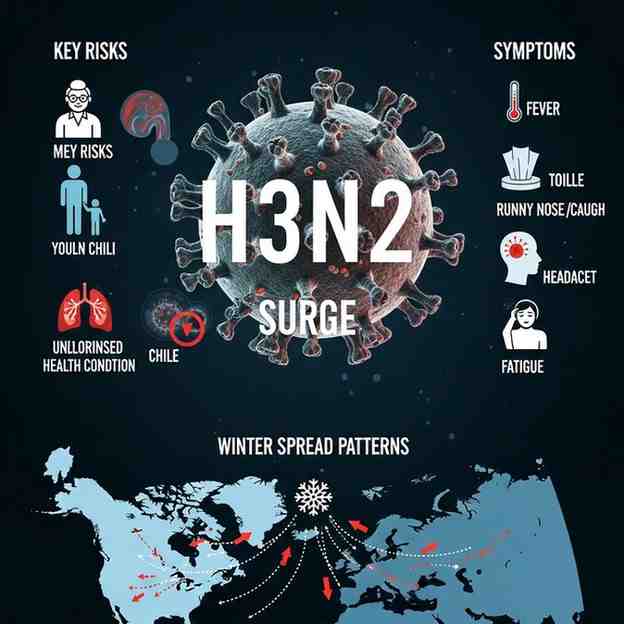
H3N2, a prominent subtype of influenza A, is once again fuelling significant flu waves across multiple countries. Known for its rapid mutation rate and high transmissibility, the virus poses elevated risks for young children, older adults and individuals with underlying health conditions.
Origin and Evolution of H3N2
H3N2 first appeared during the 1968 global flu outbreak, arising from an antigenic shift involving avian viruses. Since then, it has remained a dominant seasonal strain, responsible for 10–20% of annual global flu cases. Its quick mutation through antigenic drift often weakens population immunity, making vaccines less effective in some years and enabling recurrent outbreaks.
How H3N2 Infects the Body
The virus attaches to receptors in the upper respiratory tract using hemagglutinin (H3) spikes. Once inside the cell, it exploits “cap-snatching” to hijack human genetic machinery, producing thousands of new viral particles within hours. Structural changes over time, including additional glycosylation, help the virus evade antibodies and improve its binding efficiency.
Winter Surge and Transmission Patterns
Cold and dry winter air increases viral survival, while indoor crowding accelerates spread. Surveillance in India during late 2025 recorded a sharp rise in H3N2 positivity, mirroring similar trends across Europe as newer subclades demonstrated higher transmissibility.
Exam Oriented Facts
-
H3N2 originated from the 1968 influenza pandemic .
-
Causes 10–20% of global flu infections annually.
-
Mutates rapidly through antigenic drift .
-
Symptoms peak on days 3–4 , when contagiousness is highest.
Month: Current Affairs - December 11, 2025
Category: Seasonal influenza, Public health surveillanc