Overview :
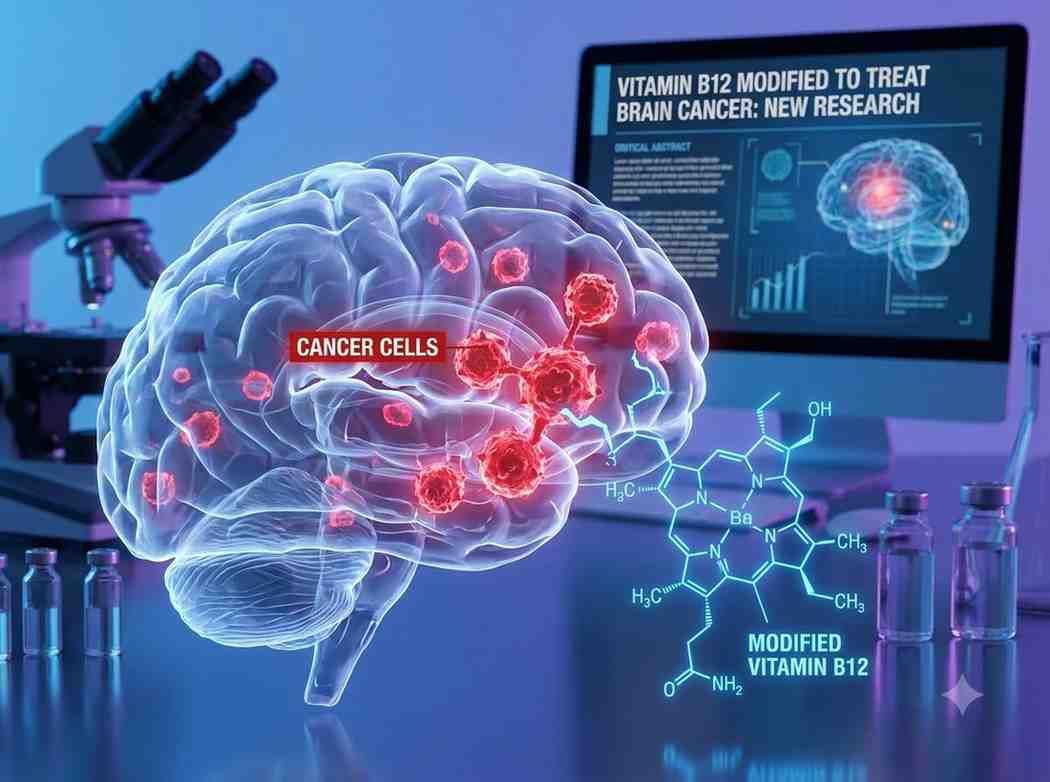
Scientists developed a modified vitamin B12 analogue (nitrosylcobalamin/NO-Cbl) that crosses the blood-brain barrier and selectively kills glioblastoma cells. Published in Oncoscience, the research remains in preclinical phase. While promising, clinical application still lies years away.
Understanding the Blood-Brain Barrier
Think of the blood-brain barrier as a fortress wall protecting the brain. It allows essential nutrients in but blocks harmful substances. Unfortunately, this wall also stops anti-cancer drugs from reaching tumours. The B12 analogue acts like a spy—disguised to enter the fortress while carrying a weapon.
Why Glioblastoma Is Deadly
GBM grows aggressively and recurs despite treatment. Average survival remains 12-15 months after diagnosis. New approaches are urgently needed. The B12 analogue offers a fresh angle—targeting the delivery problem rather than just the drug itself.
Nitric Oxide's Role
Nitric oxide is a gas molecule that can kill cells. But delivering it specifically to tumours has been challenging. The B12 analogue ensures nitric oxide reaches only cancer cells—minimising damage to healthy brain tissue.
Preclinical vs Clinical
Research occurs in phases:
This study is preclinical—promising but not yet tested in humans. Drug development typically takes 10-15 years from discovery to market.
Challenges Ahead
Even if preclinical results hold, clinical trials may reveal side effects, dosing issues, or limited effectiveness. The research represents hope, not certainty.
Exam-Focused Points :
-
Compound name Nitrosylcobalamin (NO-Cbl)—modified analogue of vitamin B12
-
Mechanism Carries nitric oxide that selectively kills tumour cells
-
Key breakthrough Crosses the blood-brain barrier—major obstacle for brain cancer drugs
-
Cancer type Glioblastoma multiforme (GBM)—one of the deadliest brain cancers
-
Research stage Preclinical—has not reached human trials yet
-
Current treatments Surgery, radiotherapy, chemotherapy (limited effectiveness)
-
Journal Oncoscience published the research
FAQs :
Q1: What is nitrosylcobalamin?
A modified vitamin B12 analogue designed to carry nitric oxide to tumour cells.
Q2: What makes this approach unique?
It crosses the blood-brain barrier, which normally blocks most anti-cancer drugs.
Q3: Which cancer does this target?
Glioblastoma multiforme (GBM)—a highly aggressive brain cancer.
Q4: Is the treatment ready for patients?
No. Research is still in the preclinical phase.
Q5: What are current treatments for GBM?
Surgery, radiotherapy, and chemotherapy—but patient outcomes remain poor.
Month: Current Affairs - Aug 06, 2026
Category: Healthcare