Overview :
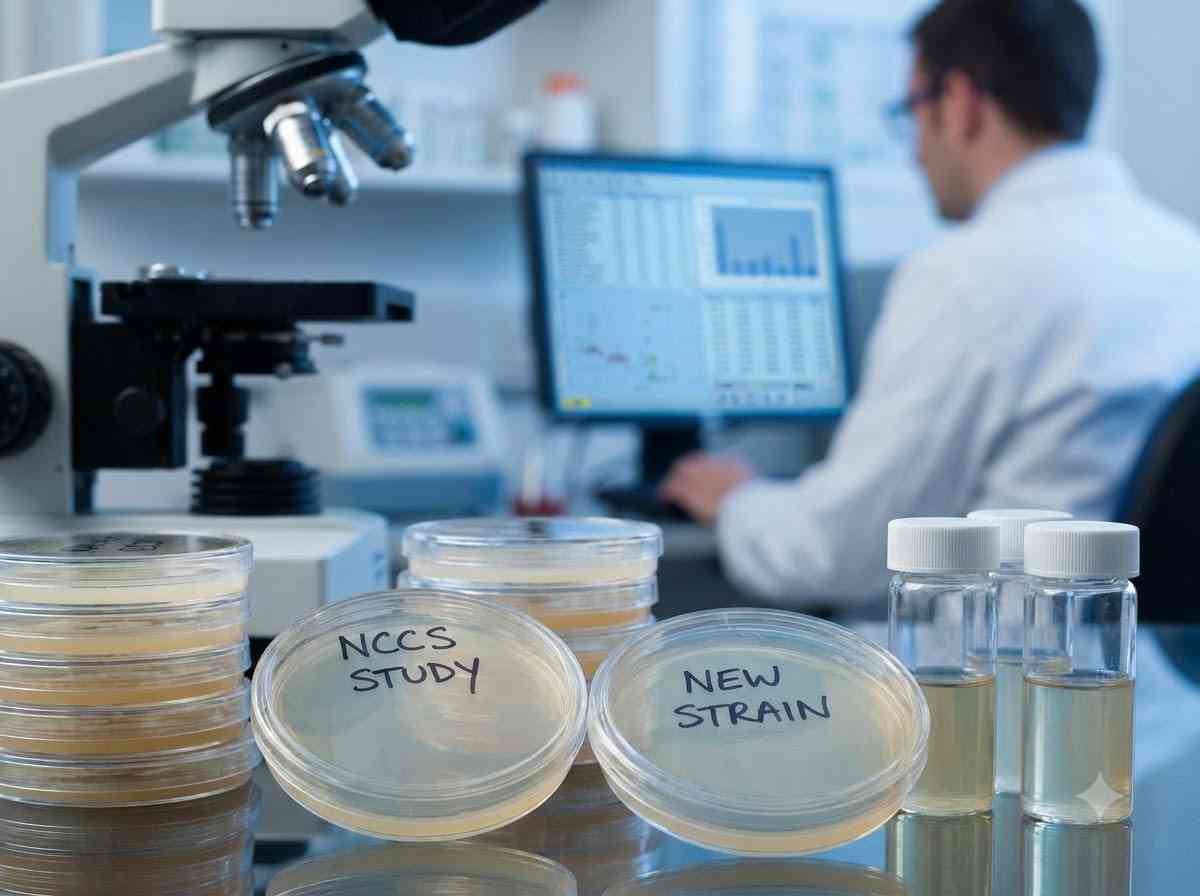
National Centre for Cell Science (NCCS), an autonomous DBT-aided institute in Pune, recently discovered nearly 200 previously undocumented microbial strains. The study reveals gut health depends on diet, geography, and lifestyle. NCCS houses the third-largest microbial collection globally and serves as India's national cell repository.
Understanding NCCS's Evolution
Think of NCCS as a library for cells and microbes. It started as a small tissue culture facility in 1986. By 1988, it became NFATCC—a national repository. In 1996, it expanded to NCCS with a broader research mandate.
The Tripartite Mandate
NCCS serves three functions:
-
Repository Stores and distributes cell lines to researchers across India
-
Research Conducts cutting-edge cell biology research
-
Teaching Trains the next generation of researchers
The Microbiome Discovery
The recent study identified nearly 200 previously unknown microbial strains. This challenges assumptions about gut health—what works in Western populations may not apply in India. Diet, geography, and lifestyle shape our microbiomes differently. Think of it as needing an Indian map for an Indian ecosystem.
Research Domains
NCCS tackles major health challenges:
-
Cancer Understanding and targeting cancer cells
-
Infectious diseases Microbiology and immunology
-
Regenerative medicine Stem cell biology
-
Metabolic disorders Links to microbiology
The Microbial Collection
Third-largest in the world—this makes NCCS a global resource. Researchers worldwide can access these microbial cultures for their studies.
DBT's Role
The Department of Biotechnology funds NCCS as part of India's biotechnology ecosystem. This support enables cutting-edge research and infrastructure.
Exam-Focused Points :
-
Parent Ministry Department of Biotechnology, Ministry of Science and Technology
-
Location Savitribai Phule Pune University campus, Pune, Maharashtra
-
Origin National Tissue Culture Facility (1986) → NFATCC (1988) → NCCS (1996)
-
Tripartite mandate National Cell Repository, basic cell biology research, human resource development
-
Research areas Cell Biology, Cancer, Structural Biology, Infectious Diseases, Neurobiology, Stem Cell Biology
-
Recent discovery Nearly 200 undocumented microbial strains; study links gut health to diet, geography, and lifestyle
-
Global standing Third-largest microbial collection in the world
FAQs :
Q1: What is NCCS?
An autonomous organisation aided by DBT, Ministry of Science and Technology, focused on cell biology research.
Q2: Where is NCCS located?
On the campus of Savitribai Phule Pune University, Pune, Maharashtra.
Q3: What was NCCS earlier called?
National Facility for Animal Tissue and Cell Culture Collection (NFATCC), established in 1988.
Q4: What is the significance of NCCS's recent study?
It uncovered nearly 200 new microbial strains and highlighted the need for India's own microbiome map.
Q5: What is NCCS's global ranking in microbial collection?
Third-largest microbial collection in the world.
Month: Current Affairs - Aug 06, 2026
Category: Research and Development