Overview :
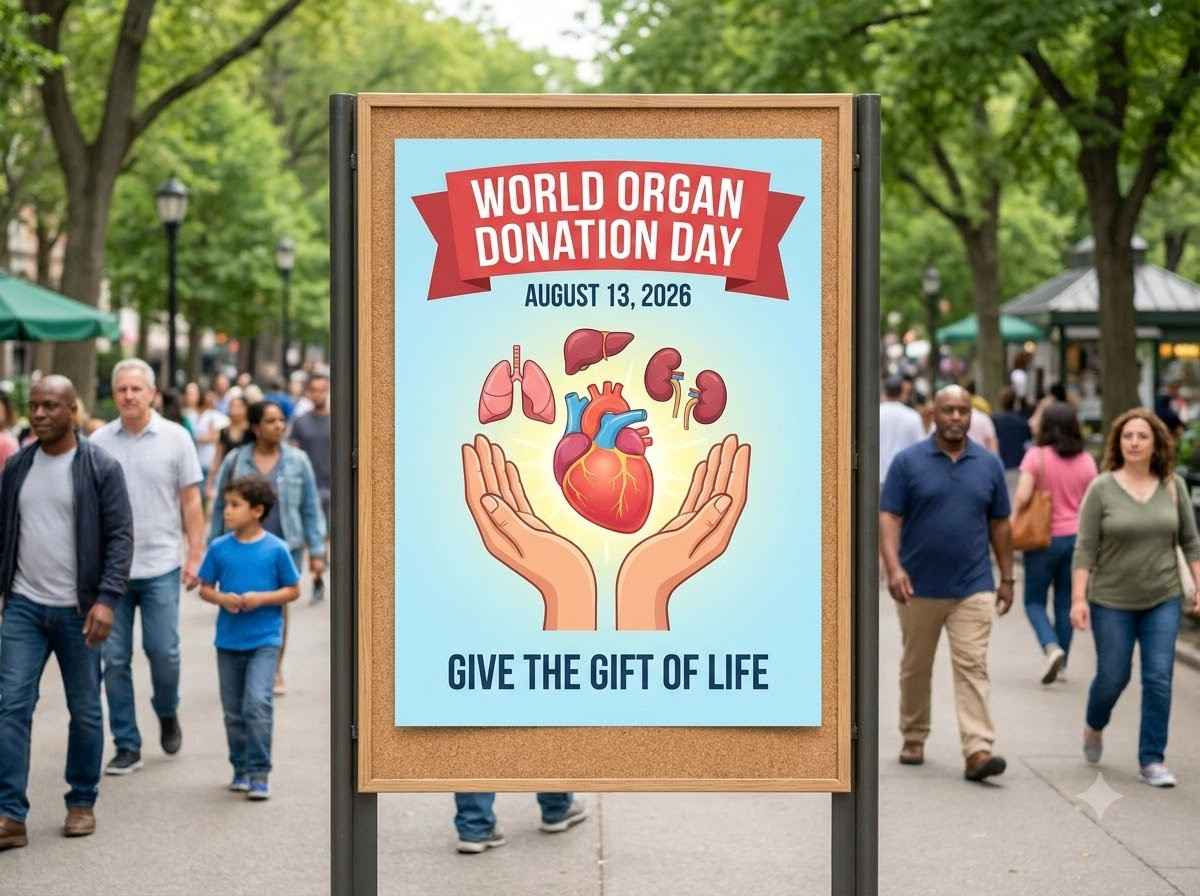
World Organ Donation Day is observed annually on August 13 to raise awareness about organ donation and transplantation. The day aims to bridge the gap between patients awaiting transplants and available organs. India observes its own National Organ Donation Day on August 3, commemorating the country's first successful deceased-donor heart transplant in 1994.
Organ Donation
Think of organ donation as a gift of life. One donor can save up to eight lives by donating multiple organs. The gap between demand and supply is vast—thousands die waiting for transplants.
The First Kidney Transplant (1954)
The first successful kidney transplant was performed in 1954. Ronald Herrick donated a kidney to his identical twin brother, Richard. Dr Joseph Murray performed the surgery and later received the Nobel Prize (1990) for this breakthrough.
Types of Donation
-
Living donation An organ or part of an organ donated by a living person. Common examples: one kidney, part of the liver.
-
Deceased donation Organs retrieved after death, subject to medical and legal requirements. This includes heart, lungs, liver, kidneys, pancreas, and intestines.
India's Organ Donation Journey
India's National Organ Donation Day is observed on August 3, marking the country's first successful deceased-donor heart transplant in 1994. This event was a milestone in Indian medical history.
NOTTO's Role
The National Organ and Tissue Transplant Organisation (NOTTO) coordinates organ donation and transplantation in India. The date was later moved to August 3 from the earlier November 27 observance to honour the 1994 transplant.
The Need and the Gap
Thousands of patients wait for organs. World Organ Donation Day aims to increase awareness and encourage registration as donors. Organ donation can transform lives—a single donor can save multiple lives.
Key Organ Donation Facts
-
Deceased donor organs Kidneys, liver, heart, lungs, pancreas, intestines
-
Living donor organs One kidney, part of liver, part of pancreas, part of intestine
-
Tissues that can be donated Corneas, heart valves, bones, skin
Exam-Focused Points :
-
World Organ Donation Day August 13 (observed globally)
-
India's National Organ Donation Day August 3 (since 2010; shifted from November 27)
-
First successful kidney transplant 1954—Dr Joseph Murray performed the procedure (Nobel Prize 1990)
-
Organ types Heart, kidneys, liver, lungs, pancreas, intestines
-
Living donation One kidney, part of liver, pancreas, intestine, or lung
-
Deceased donation Heart, lungs, liver, kidneys, pancreas, intestines; also corneas, heart valves, bones, skin
-
India's first deceased-donor heart transplant 1994—linked to the August 3 observance
FAQs :
Q1: When is World Organ Donation Day?
August 13 every year.
Q2: What is the purpose of this day?
To raise awareness about organ donation and encourage people to become donors.
Q3: What was the first successful organ transplant?
A kidney transplant in 1954 between identical twins Ronald and Richard Herrick, performed by Dr Joseph Murray.
Q4: What organs can be donated by a living donor?
One kidney, part of the liver, part of the pancreas, part of the intestine, and sometimes part of a lung.
Q5: When is India's National Organ Donation Day?
August 3, commemorating India's first successful deceased-donor heart transplant in 1994.
Month: Current Affairs - Aug 13, 2026
Category: Days