Overview
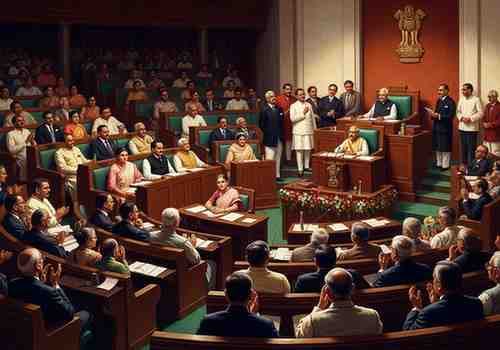
On April 16, the Constitution (131st Amendment) Bill, 2026, was introduced in Lok Sabha after a division vote. The bill, tabled by Arjun Meghwal, is part of a larger legislative package to legalize the reservation of women and to begin delimitation changes, a significant move towards restructuring elections.
Legislation package and strategic bills.
Three bills that tied together were proposed by the government: the Constitution (131st Amendment) Bill, the Delimitation Bill, and the Union Territories Laws (Amendment) Bill. These have been procedurally connected, with the latter two relying on the constitutional amendment being passed. This integrated approach aims to synchronise reservation and constituency restructuring.
Women’s Reservation Framework
The proposal sees the Lok Sabha being increased to 815 seats, post delimitation, with 272 seats allocated to women (a third). It is planned to be implemented based on post-2026 Census data and a new delimitation exercise. The government has guaranteed that none of the states will lose the representation that it has currently even with the restructuring.
Political Respondences and Concerns.
The reform has caused a great opposition especially among the southern states. Leaders like Gaurav Gogoi and Mamata Banerjee have expressed concerns with the linkage of reservation to delimitation saying that it will slow down implementation and redistribute political balance. The problem has sparked off protests and a heated debate in Parliament.
Legislative Process and Way Forward
The Lok Sabha will continue to debate extensively (up to 18 hours) and voting is likely to take place in the near future. Being a constitutional amendment, the bill must have a special majority in Parliament. Its passage will set the course of one of the most important elections reforms in India.
Exam-Focused Key Points
- Bill presented in Lok Sabha, (131st Amendment) Constitution.
- Linked with Delimitation and UT Laws Amendment Bills.
- Proposal: 272 out of 815 seats (33% women).
- On the basis of post-2026 Census and delimitation exercise.
- Needs special majority to pass.
Practice Problems (with Solutions)
Q1. The objective of the Constitutional Amendment Bill of the 131 st is what?
Reason: To initiate women reservation and allow delimitation reforms.
Q2. What are the percentages of seats that are to be set aside to women?
Answer: One-third (33%).
Q3. What is delimitation?
Response: Re-drawn electoral constituencies according to changes in population.
Q4. Which kind of majority is needed to amend the constitution?
Response: Special majority in Parliament.
Month: Current Affairs - Apr 16, 2026
Category: Constitutional Amendments