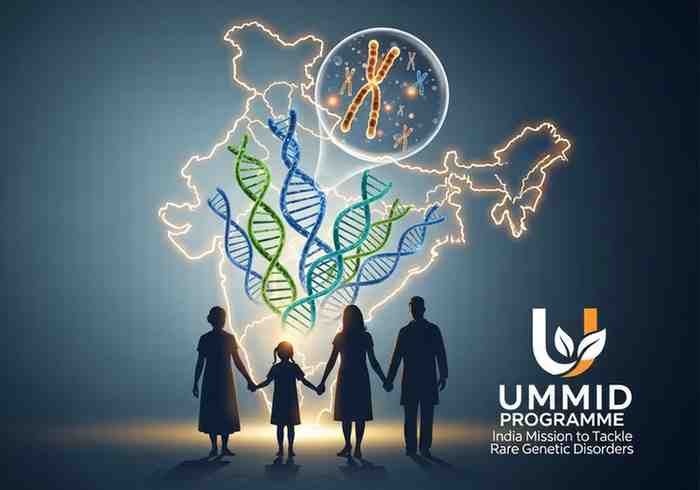
Overview
The UMMID (Unique Methods of Management of Inherited Disorders) Programme is India’s major national initiative to improve the diagnosis, prevention, and management of inherited genetic disorders. Launched by the Department of Biotechnology (DBT) in 2019, the programme focuses on affordable healthcare, early detection, genetic counselling, and public awareness. It has established nearly 30 NIDAN Kendras across the country to provide advanced genetic testing and counselling services, especially in underserved regions.
UMMID Programme Dedicated to the Nation
On 21 May 2026, Union Minister Jitendra Singh officially dedicated the UMMID Programme to the nation during a special event in New Delhi. During the event, the government also launched the UMMID Dashboard and released the UMMID Compendium to strengthen nationwide monitoring and awareness.
The Minister highlighted that genomic and precision medicine will play a major role in shaping India’s future healthcare system. He also noted that the programme has already benefited nearly three lakh individuals through screening, diagnosis, and outreach activities in aspirational districts and remote regions.
What Is the UMMID Programme?
UMMID stands for Unique Methods of Management of Inherited Disorders . It is a national initiative launched on 23 September 2019 by the Department of Biotechnology under the Ministry of Science and Technology.
The programme was designed to create a complete system for handling inherited and rare genetic disorders through:
- Early diagnosis
- Prenatal testing
- Newborn screening
- Genetic counselling
- Public awareness
- Training of healthcare professionals
The core idea behind the programme is simple: “Prevention is better than cure.”
Why Is the Programme Important?
Genetic and inherited disorders have remained a serious but neglected healthcare challenge in India for many years. Many families spend years searching for proper diagnosis and treatment because testing facilities are limited and treatment costs are extremely high.
India faces a higher burden of genetic disorders due to:
- Large population size
- High birth rate
- Limited awareness
- Consanguineous marriages in some communities
Congenital and genetic disorders are among the leading causes of newborn mortality in urban India. Experts estimate that genetic disorders account for nearly 80% of rare diseases. This made it necessary to build a strong national healthcare framework focused on prevention and early detection.
Three Major Pillars of the UMMID Programme
1. NIDAN Kendras
NIDAN stands for National Inherited Diseases Administration Kendras . These centres are established in government hospitals to provide:
- Prenatal testing
- Newborn screening
- Genetic counselling
- Diagnostic services for inherited disorders
Month: Current Affairs - May 22, 2026
Category: Social Justice, Health