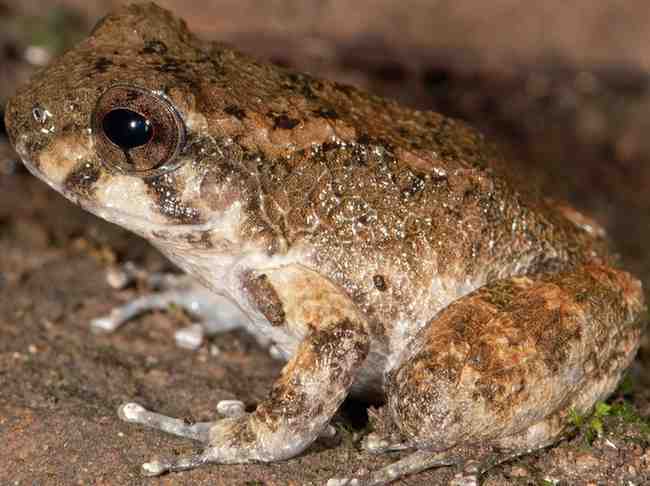
Two New Frog Species Discovered from Eastern Himalaya, Boosting India’s Amphibian Record
Indian herpetological research has registered a major breakthrough with the identification of two previously unknown frog species from the eastern Himalaya, one of the world’s most significant biodiversity hotspots. The discovery reinforces Arunachal Pradesh’s status as a centre of rich but underexplored wildlife diversity and highlights the continuing importance of field-based scientific research in remote mountain ecosystems.
Research Team and Scientific Leadership
The discovery was led by S D Biju , a senior professor at Delhi University popularly known as the “Frogman of India”. The findings emerged from the doctoral research of his student Akalabya. Over a period of more than three years, the team conducted systematic surveys across isolated and forested regions of Arunachal Pradesh , focusing on habitats that had seen little prior scientific attention.
Soman’s Slender Arm Frog ( Leptobrachium soman )
One of the newly described species has been named Soman’s Slender Arm Frog ( Leptobrachium soman ) . It was discovered in Tiwarigaon in Arunachal Pradesh and is named in memory of Kerala-based journalist E. Somanath, who was closely associated with several amphibian field expeditions.
This medium-sized frog measures about 55 mm in length and is distinguished by its silver-grey to light blue eyes. Its body is greyish-brown with irregular light-grey markings. The species inhabits dense evergreen forests, where males are typically observed calling from the edges of both slow- and fast-flowing streams.
Mechuka Slender Arm Frog ( Leptobrachium mechuka )
The second species, Mechuka Slender Arm Frog ( Leptobrachium mechuka ) , was identified from the evergreen forests and adjacent grasslands around Mechuka in Arunachal Pradesh. Slightly larger than its counterpart, it measures around 60 mm and has a uniform brown body with a reddish hue and striking silvery white eyes.
The species reflects the unique amphibian diversity supported by the forest–grassland mosaics of the eastern Himalaya, particularly in high-altitude landscapes where ecological conditions vary sharply over short distances.
Scientific Publication and Conservation Importance
The detailed taxonomic descriptions of both species were published in the peer-reviewed US-based journal PeerJ . Researchers note that discoveries like these underline how much of India’s amphibian diversity remains undocumented. They also stress the urgent need to conserve forest ecosystems in Arunachal Pradesh, as habitat loss could threaten species even before they are fully studied.
Key Exam-Focused Points
-
The eastern Himalaya is recognised as a global biodiversity hotspot .
-
Both new species belong to the genus Leptobrachium under the family Megophryidae .
-
New species descriptions require detailed morphological analysis and peer-reviewed publication .
-
Arunachal Pradesh is one of India’s most species-rich yet least explored states.
-
Amphibians are key bioindicators of ecosystem health.
Month: Current Affairs - January 12, 2026
Category: Environment, Biodiversity