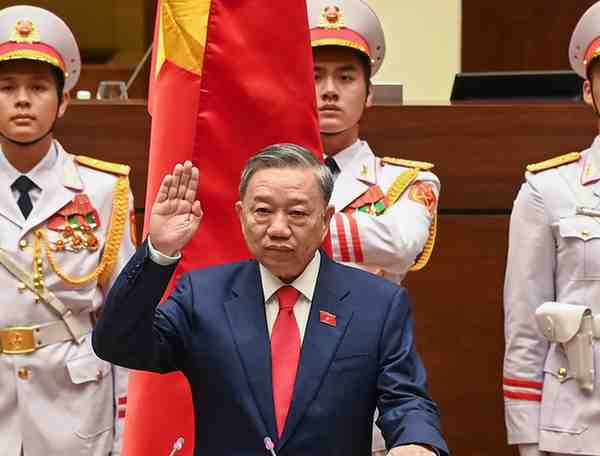
To Lam’s Election: A New Phase in Vietnam’s Leadership
Vietnam’s National Assembly has unanimously elected To Lam, the General Secretary of the Communist Party, as the country’s President for a five-year term. With all 495 lawmakers voting in his favour, the decision reflects strong internal consensus within the political system. This development marks a notable shift, as it brings the two most powerful positions in Vietnam under a single leader, strengthening central authority.
Departure from Collective Leadership
Traditionally, Vietnam has followed a collective leadership model, where power is distributed among key leaders to maintain balance within the system. To Lam’s dual role represents a clear departure from this approach. While this consolidation may improve coordination and enable faster decision-making, it also raises concerns about reduced institutional checks and a tilt toward more centralised governance.
Economic Vision and Reform Priorities
To Lam has outlined an ambitious economic agenda focused on innovation, technology, and digital transformation. His strategy aims to move Vietnam beyond low-cost manufacturing toward a more sustainable and high-value growth model. The plan includes strengthening domestic private enterprises alongside state-owned firms. Although global investors see continuity in pro-business policies, there are concerns about potential favouritism, corruption risks, and financial imbalances.
Foreign Policy: Continuity with Flexibility
Despite domestic changes, Vietnam’s foreign policy is expected to remain stable. The country will likely continue its “Bamboo Diplomacy,” balancing relations with major powers while safeguarding national interests. To Lam’s approach is viewed as pragmatic, focusing on stability and strategic autonomy in a complex geopolitical environment.
Exam-Focused Key Points
- Vietnam follows a one-party system led by the Communist Party.
- The National Assembly is the highest legislative authority.
- “Bamboo Diplomacy” denotes a flexible and balanced foreign policy.
- State-owned enterprises remain central to the economy.
- Power consolidation may enhance efficiency but reduce checks and balances.
Month: Current Affairs - April 07, 2026
Category: Political Systems