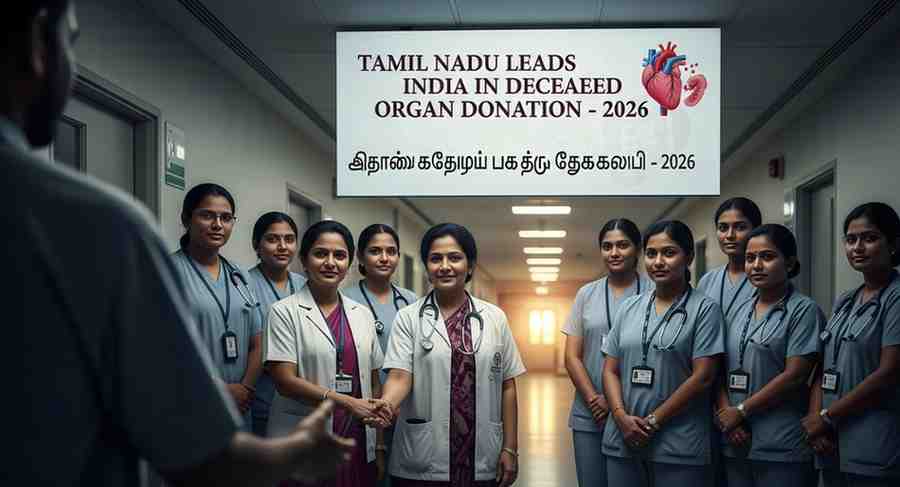
Transtan Model Strengthens Organ Donation System in Tamil Nadu
Tamil Nadu has continued to lead India in deceased organ donation, registering 57 donors in the first two months of 2026—almost one donor per day. The programme operates under the Transplant Authority of Tamil Nadu (TRANSTAN), which has developed a well-coordinated and transparent system over nearly two decades. Officials credit the success to strong governance, public awareness, and the use of digital technology in organ allocation.
Institutional Framework and Early Initiatives
Tamil Nadu began organising its deceased organ donation programme in 2008, well before such systems became widespread across India. The framework brings together policymakers, healthcare institutions, law enforcement agencies, technical experts, media organisations and civil society groups.
Although the programme experienced a slowdown during the COVID-19 pandemic, it has since recovered significantly. Government hospitals have also increased their participation, with several public institutions matching or surpassing private hospitals in organ retrieval and transplantation activities.
Measures Strengthening the Programme
Multiple initiatives have helped increase awareness and participation. Public tribute ceremonies known as “honour walks” recognise deceased donors and express gratitude to their families. Since 2023, more than 650 honour walks have been conducted across the state.
Traffic police and healthcare authorities collaborate to create “green corridors”, allowing organs to be transported quickly between hospitals without delays. In 2021, the Vidiyal mobile and web application was introduced to improve transparency and streamline the allocation process. Medical students have also been involved as awareness ambassadors to promote organ donation.
Building Public Trust and Ethical Practices
Officials emphasise that the programme relies on voluntary consent. Families receive careful counselling before decisions are made, ensuring that the process remains respectful and ethical. Acceptance rates are estimated at around 75 percent after the first round of counselling and can rise to nearly 80 percent after further discussions.
The state has deliberately avoided financial incentives, maintaining that organ donation should remain a voluntary humanitarian act.
Important Facts for Exams
-
Tamil Nadu formalised its deceased organ donation programme in 2008.
-
Green corridors enable rapid transport of organs between hospitals.
-
Government Order 331 provides state honours to deceased organ donors.
-
TRANSTAN manages organ allocation through a centralised digital system.
Tamil Nadu’s model, built on transparency, strong institutional coordination and public participation, is widely regarded as a benchmark for strengthening organ donation programmes across India.
Month: Current Affairs - Mar 05, 2026
Category: Health | Organ Donation