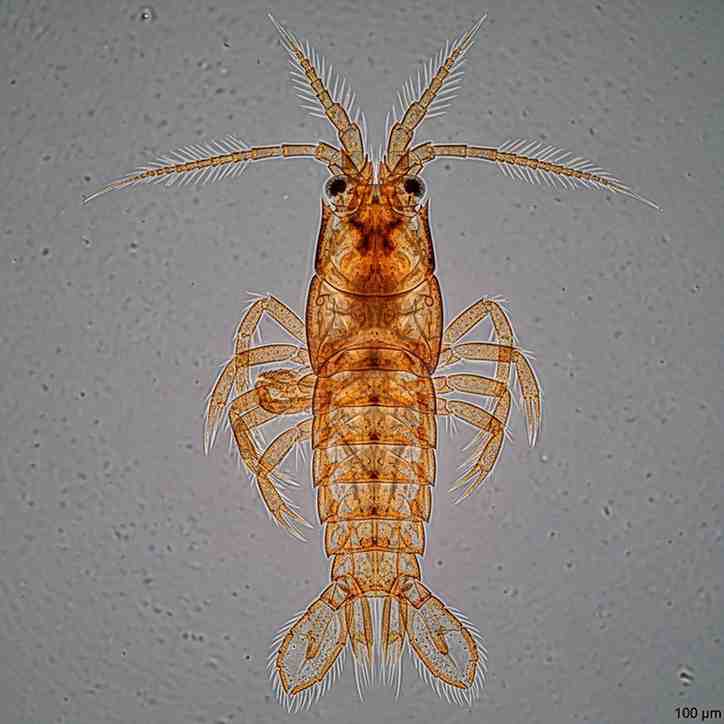
Novel Microscopic Crustacean Discovered in Lakshadweep’s Lagoon Ecosystem
Scientists have identified a minute crustacean from the Kavaratti lagoon in Lakshadweep as a completely new genus and species , highlighting the immense yet poorly documented marine biodiversity within India's critical island ecosystems. This microscopic organism, belonging to the copepod family Laophontidae , requires high-powered microscopic examination for study due to its sub-millimeter size.
Collection and Taxonomic Identification
The organism was collected from the sediment-rich lagoon environment of Kavaratti. Initial observations classified it among known copepods, but subsequent detailed morphological analysis revealed unique structural characteristics. These distinct traits confirmed that the organism did not align with any established genus within the Laophontidae family, warranting its designation as a novel taxonomic entity.
Etymology and Publication
The new species has been formally named “Indiaphonte bijoyi” . The genus name ‘Indiaphonte’ pays tribute to India, while the species epithet ‘bijoyi’ honors Dr. S. Bijoy Nandan , a prominent Indian marine scientist and academic. The species was described by Neelima Vasu K. of Cochin University of Science and Technology in collaboration with Samuel E. Gómez-Noguera of UNAM University . The findings have been published in a reputable international peer-reviewed taxonomic journal .
Physical Characteristics and Ecological Niche
Indiaphonte bijoyi possesses a semi-cylindrical, slightly flattened body that tapers posteriorly, with prominent antennary appendages. Females, measuring between 518 and 772 micrometres , are slightly larger than males, which range from 508 to 756 micrometres . As a member of the meiofauna —tiny invertebrates inhabiting aquatic sediments—this copepod plays a vital role in nutrient recycling and maintaining sediment ecosystem stability .
Scientific Significance and Conservation Implication
Copepods of the order Harpacticoida , to which this species belongs, are recognized as crucial bio-indicators of environmental health, sensitive to pollutants, oil spills, and climate change. They also synthesize omega-3 fatty acids , fundamental for aquatic food webs and human nutrition. This discovery underscores the urgent need for intensified taxonomic research and conservation efforts in India's fragile lagoon and coral reef ecosystems, which are reservoirs of unknown biodiversity.
Exam-Focused Important Facts:
-
New Species: Indiaphonte bijoyi — a new genus and species of marine copepod.
-
Discovery Site: Kavaratti lagoon, Lakshadweep , India.
-
Taxonomic Family: Laophontidae under the order Harpacticoida (Copepoda).
-
Size Range: Between 508 and 772 micrometres (sub-millimeter).
-
Ecological Role: Part of meiofauna ; acts as a bio-indicator and aids in nutrient cycling.
-
Significance: Highlights underexplored marine biodiversity in Indian island ecosystems
Month: Current Affairs - January 20, 2026
Category: Biodiversity & Environment