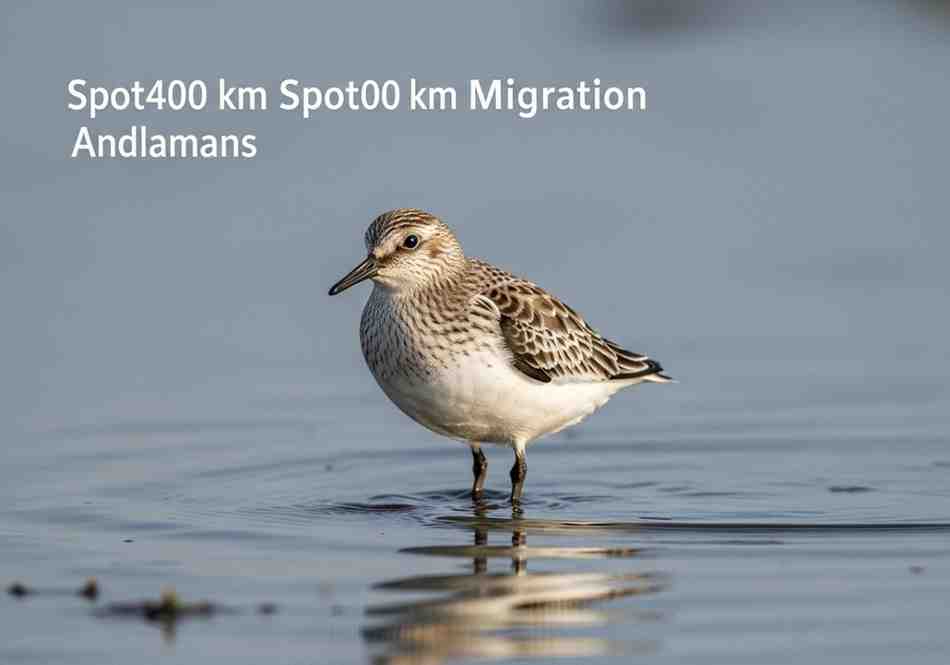
Remarkable Migration to Narcondam Island
A tagged Sanderling has been recorded on Narcondam Island after travelling over 7,400 kilometres from South Australia. This rare sighting highlights the exceptional endurance and navigation abilities of migratory shorebirds. It also emphasises the ecological importance of remote island habitats as critical stopover sites along global migration routes.
About the Sanderling
The Sanderling ( Calidris alba ) is a small, plump wading bird commonly seen darting along sandy beaches. Its name comes from the Old English term “sand-yrðling,” meaning “sand-ploughman.” The bird undergoes seasonal changes in appearance—during winter, it appears pale with a dark shoulder patch, while in summer it develops a reddish-brown hue on the face and throat.
Habitat and Global Distribution
Sanderlings occupy diverse habitats, including tidal sand flats, mudflats, coastal shores, and inland water bodies. They are also found in vegetated wetlands and rocky terrains. The species has an extensive global distribution, spanning North America, Europe, Asia, Africa, South America, and Oceania, making it one of the most widespread shorebirds.
Migration and Feeding Behaviour
Sanderlings are long-distance migrants, travelling between 3,000 and 10,000 kilometres annually between breeding and wintering grounds. Their presence in the Andaman and Nicobar Islands demonstrates their remarkable navigational precision. They are carnivorous, feeding mainly on small crustaceans, molluscs, and other invertebrates found in coastal ecosystems.
Exam-Focused Key Points
- Scientific name: Calidris alba .
- Long-distance migratory bird (up to 10,000 km).
- Found on all continents except Antarctica.
- Habitat: coastal and wetland ecosystems.
- IUCN Status: Least Concern.
Threats and Conservation Concerns
Despite its wide distribution, the Sanderling faces threats from habitat degradation, especially the loss of wetlands and coastal ecosystems. Pollution, including pesticide contamination, further impacts its survival. Protecting migratory pathways and critical habitats is essential to ensure the long-term conservation of this species.
Month: Current Affairs - April 08, 2026
Category: Biodiversity | Species Migration