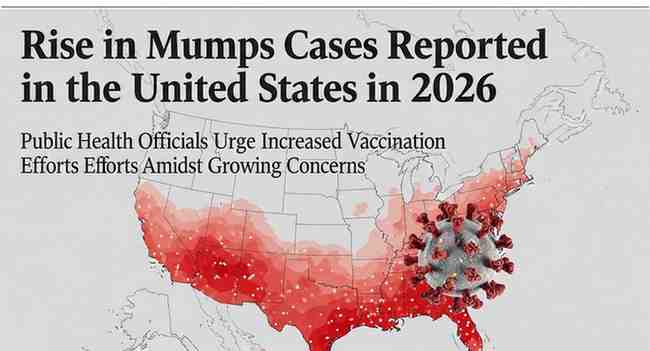
Health Authorities Warn of Mumps Resurgence Despite Vaccination
Health authorities in the United States have reported an increase in Mumps cases in 2026, raising concerns about the reappearance of vaccine-preventable illnesses. In Maryland , officials confirmed 26 cases , including 19 confirmed infections and seven probable cases. Nationwide data released by the Centers for Disease Control and Prevention recorded 34 cases across 11 jurisdictions by late February. Although vaccination has significantly reduced the incidence of mumps over the past decades, sporadic outbreaks continue to occur.
Understanding the Mumps Virus
Mumps is caused by a virus belonging to the paramyxovirus family. The disease primarily affects the salivary glands, particularly the parotid glands located near the ears. Infection spreads through respiratory droplets and saliva when an infected individual coughs, sneezes, talks or shares utensils. A major challenge in controlling the disease is that infected individuals can transmit the virus several days before symptoms appear and remain contagious for about five days after gland swelling begins.
Symptoms and Progression
The most recognisable symptom of mumps is swelling of one or both parotid glands, which causes puffy cheeks and pain near the jaw. Other symptoms include fever, headache, muscle aches, fatigue and reduced appetite. Symptoms typically develop two to three weeks after exposure to the virus. While children often experience mild illness, adolescents and adults may develop more pronounced symptoms. As a result, outbreaks frequently occur in schools, colleges and other environments where close contact is common.
Complications and Risk Factors
Most patients recover completely, but in some cases the infection can cause complications. These include orchitis (inflammation of the testicles), oophoritis (inflammation of the ovaries), and inflammation of the brain or surrounding tissues such as meningitis and encephalitis. Rarely, the disease can result in permanent hearing loss. Individuals who have not been vaccinated face the highest risk of infection and severe complications.
Exam-Focused Key Points
-
Mumps: Viral infection caused by a paramyxovirus .
-
Transmission: Spread through respiratory droplets and saliva.
-
MMR Vaccine protects against measles, mumps and rubella.
-
Effectiveness: Two doses of the MMR vaccine provide about 86% protection against mumps.
-
Breakthrough infections may occur but are usually milder.
Month: Current Affairs - Mar 09, 2026
Category: Health & Medicine