Deep-Sea “Doomsday Fish” Oarfish Spotted Close to Shore in Mexico
Two giant Oarfish were recently observed near the shoreline of Cabo San Lucas , drawing attention from beachgoers and marine researchers. The unusual sighting occurred when people on the beach noticed one oarfish struggling close to the shore and attempted to guide it back toward deeper waters. During this effort, another oarfish was seen nearby, making the event particularly rare. Such encounters are uncommon because these deep-sea creatures typically inhabit ocean depths far from the surface.
A Mysterious Deep-Sea Species
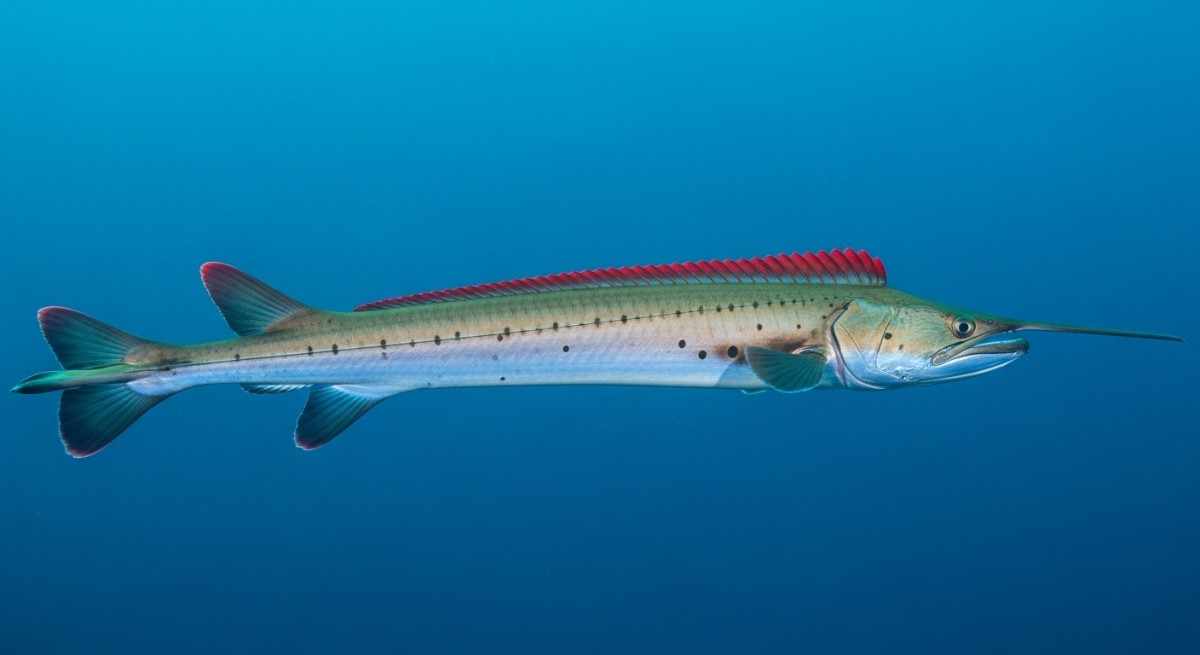
The Oarfish is regarded as one of the most mysterious fish species in the ocean. It usually lives in deep waters at depths of around 3,000 feet (about 900 metres) , where sunlight barely reaches. The fish is easily recognised by its long, ribbon-shaped silvery body and a distinctive bright red dorsal crest that runs from the head along its back.
Oarfish can grow to around 30 feet (9 metres) in length, making them the longest bony fish known in the world’s oceans .
Rare Coastal Appearance
Because oarfish inhabit deep ocean zones, sightings near coastlines are extremely unusual. Historical records indicate that the coastline around Cabo San Lucas has recorded only a few such appearances over several centuries.
The simultaneous presence of two oarfish near the same shoreline therefore stands out as an exceptional occurrence. For marine scientists, such encounters provide rare opportunities to observe the physical features and behaviour of these elusive animals.
Myths About the “Doomsday Fish”
In popular folklore, oarfish are sometimes referred to as “doomsday fish.” In some cultures, particularly in parts of East Asia, their appearance near the ocean surface has historically been linked to earthquakes or other natural disasters.
However, scientists emphasise that no scientific evidence supports a connection between oarfish sightings and seismic events . Researchers attribute most surface appearances to factors such as illness, disorientation, or changes in ocean conditions.
Importance for Marine Research
Despite their impressive size, the life cycle, behaviour and ecological role of the Oarfish remain poorly understood due to their deep-sea habitat.
Rare sightings like the one near Cabo San Lucas provide valuable insights into deep-ocean biodiversity and highlight how much of the world’s oceans remain unexplored.
Exam-Focused Points
-
Oarfish are the longest known bony fish , reaching up to 9 metres in length.
-
They generally live at depths of around 900 metres or more .
-
Oarfish belong to the family Regalecidae and have ribbon-like bodies with a red dorsal crest .
-
Deep-sea ecosystems remain among the least explored regions on Earth .
-
The recent sighting occurred near Cabo San Lucas in Mexico.
Month: Current Affairs - March 12, 2026
Category: Environment & Biodiversity