Overview :
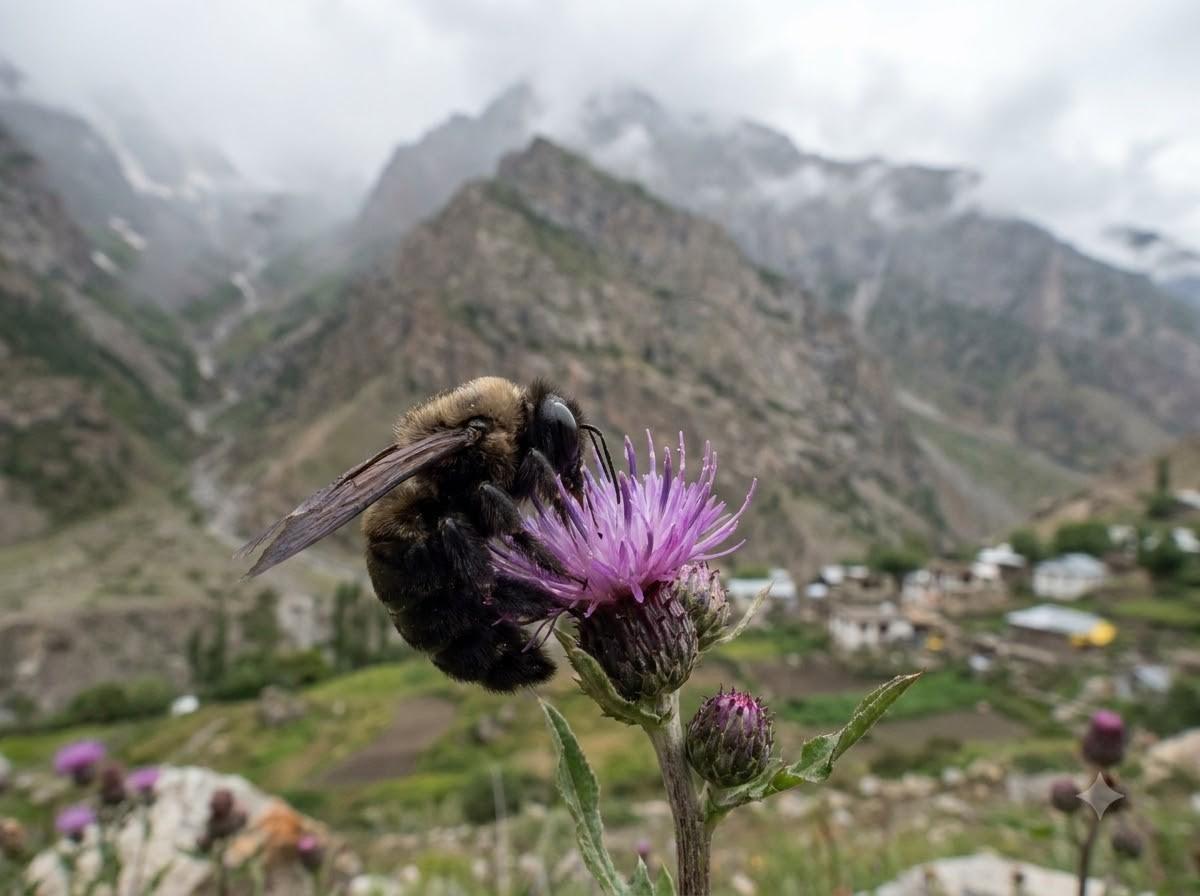
Zoological Survey of India scientists found the rare solitary bee Colletes bhutanicus in Tawang, Arunachal Pradesh. Spotting this robust pollinator expands its known range beyond Bhutan and China. Mountain adaptation makes it vital for local farming, driving agricultural innovation while supporting future agri-food exports fueled by the Indian startup ecosystem.
Exam-Focused Points :
-
Scientists recorded Colletes bhutanicus for the first time in India on August 12, 2026.
-
Researchers located this plasterer bee in Tawang district, Arunachal Pradesh.
-
Experts initially described the species in Bhutan during 2003.
-
These insects act as independent contractors, nesting individually rather than building massive eusocial hives.
-
Their habitat spans elevations from 1,500 to 3,800 metres across the Eastern Himalayas.
-
Botanists observed them pollinating 25 distinct plant species, including mustard, coriander, and eggplant.
-
Robust mountain pollinators secure crop yields, generating new raw material pathways for food-tech ventures within the Indian startup ecosystem.
FAQs :
Q: What is Colletes bhutanicus ? A: It functions as a plasterer bee. Think of it as a freelance pollinator for high-altitude plants.
Q: Where did scientists find it in India? A: Researchers spotted it in Tawang, Arunachal Pradesh. This marks its first documented Indian appearance.
Q: Why do solitary bees matter? A: They operate as independent contractors. Every female builds her own nest, directly boosting local flora without relying on a central colony.
Q: Does it impact agriculture? A: Yes. By actively pollinating food crops, it drives agricultural innovation in harsh mountain climates.
Q: How does this help the economy? A: Better mountain crop yields eventually increase agri-food exports. Thriving agriculture provides stable supply chains for emerging businesses.
Month: Current Affairs - Aug 12, 2026
Category: Biodiversity, Environment